Shooting Kill Code: how DOP Filip Vandewal created a futuristic world on a tight schedule
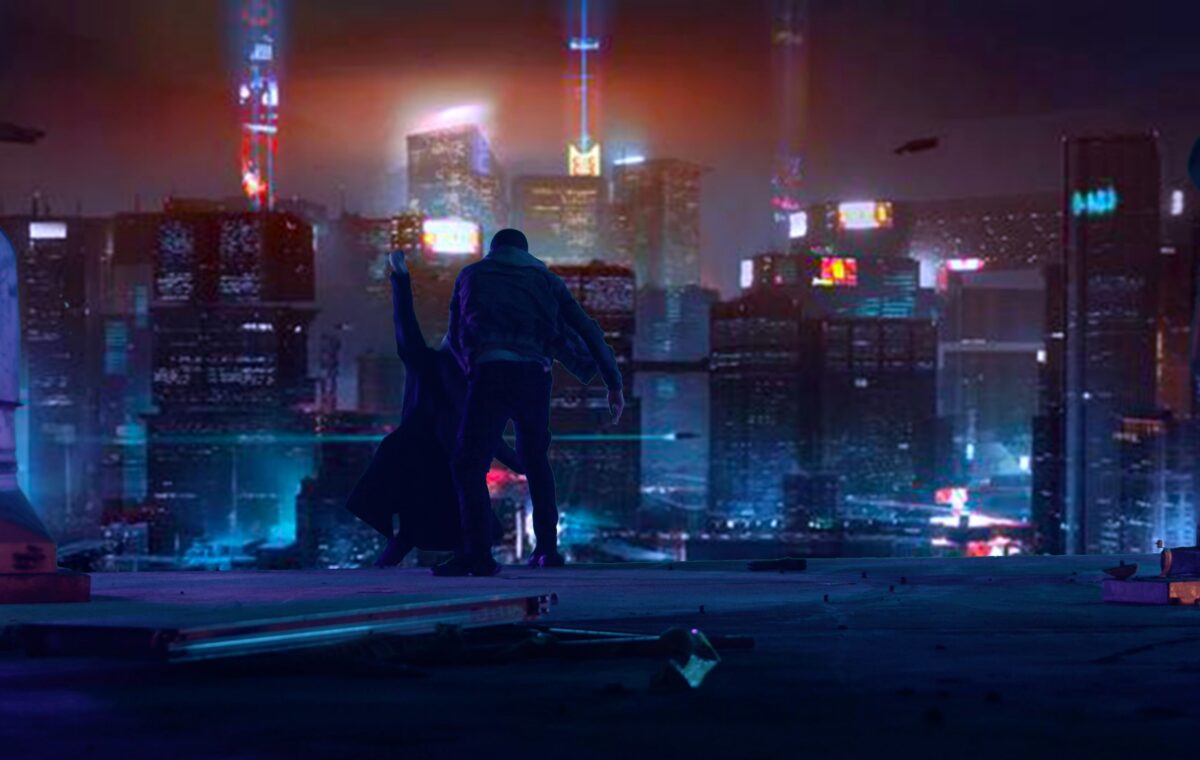
Kill Code follows a power-hungry corporation that has taken over the conventional prison system and made criminals the new law enforcers. Cyber-operative Elera uncovers the truth behind the ONYX program, a rogue AI program used by a mega-corporation to force criminals into combat. Hunted by her mentor, she joins a resistance to stop it before humanity becomes a target. The film was directed by Justin Price in his directorial debut. Filip Vandewal, SBC served as the film’s DOP.
Vandewal first got involved with the project through a friend. “He’s a line producer and we’ve done many films together,” he begins. “When this film came to him, they were still looking for someone to shoot it. As this was Justin’s first feature, they wanted a DP with experience.”
Although based in Texas, Price went to LA before filming, where he met with Vandewal to discuss his ambitions for the project. “He sat me down and showed me the script and told me what he wanted to do,” adds Vandewal. “I had some ideas for the look for the movie and that’s how it got rolling.”
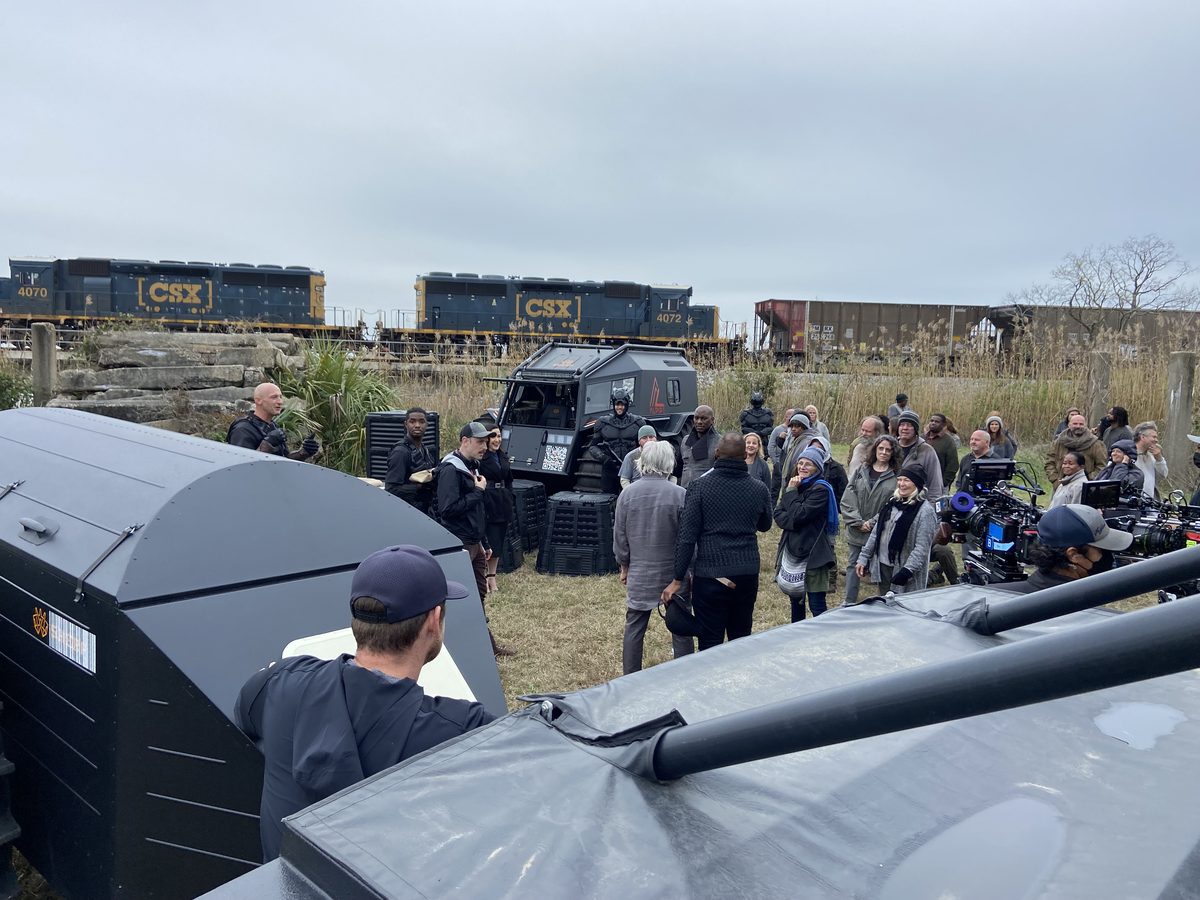
Production didn’t allow for much prep time either. Around a week after meeting Price, Vandewal drove out to Gulfport, Mississippi where the film was shot. Once in Gulfport, the crew were immediately hands on and scouting for locations to use. “There were already people working ahead of us and I came in a little later. A lot of time in the U.S. with these budget movies, it’s a three week prep to make it happen.”
Production on the film began towards the end of the Covid pandemic and masks were still required on set. “It’s been five years now since I shot the film, so it’s a while ago now,” recalls Vandewal.
As the film is set in the sci-fi world, Vandewal drew inspiration from Blade Runner 2049. “Justin also showed me bits from that film, especially the big set pieces,” he adds. “Although, we of course had a tiny budget compared to them!”
Vandewal came up with some ideas that were achievable and that could work within budget. “It came down to figuring out how we could achieve some of those looks for our project. We came up with a few ideas we could achieve, some of which we could do on set and then lots of it has to happen in post. It’s not all in camera stuff when it’s those sci-fi related movies because it’s a dystopian world that you wanted to create. Our setting is a rundown place of the future, but it still looks high tech.”
As Price was set on a very particular idea about how he wanted the movie to look, he was closely collaborating with the costume department and production design about what he wanted. “Whereas I was chiming in more around the practicality of it, rather than putting real creative thoughts into it,” says Vandewal. “It was mainly when lighting was involved on the sets and figuring out the sets that we were building and whether or not I’d need practicals etc. Our production designer, David L. Snyder was very experienced, so I had complete faith in what he was doing. He knew exactly what to give me to make me happy.”
Vandewal admits that he’s mostly known for his coverage and stresses that he has lots of input in that sense as directors respect having the time to focus on getting the best performances from actors. “While I set up the next shot or think ahead to how we can cover a whole scene in a quick way, directors can focus on other elements. Justin was also a first-time director on this project and that’s often where directors need some help.”
Vandewal points out that while new directors often have very clear visions of what they want to achieve, they don’t always have the experience to go with it. “A project of this scale, with only 20 days to shoot it is a pretty quick turnaround and that meant we needed to shoot this in a very timely fashion.”
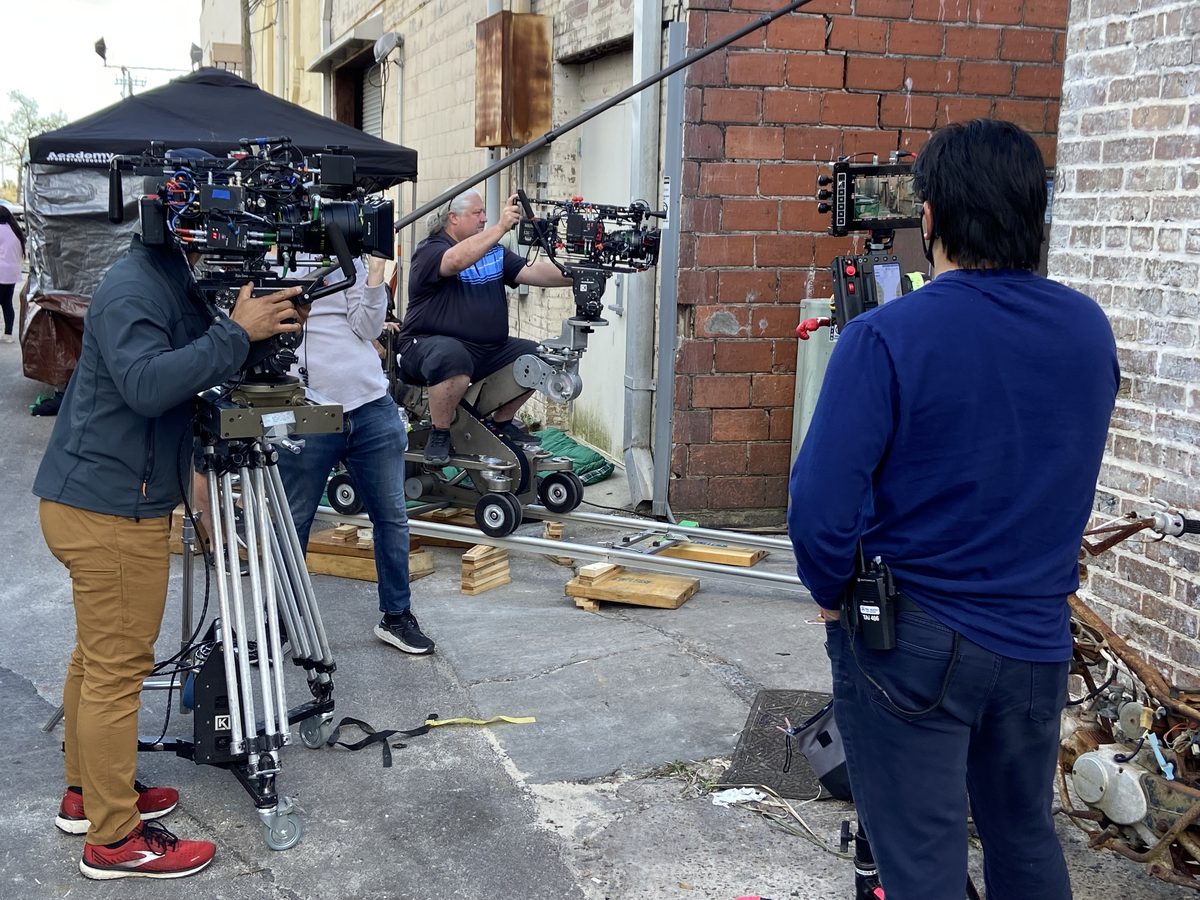
Due to shooting with a lower budget, Vandewal explains that he went back to working with a camera and lens kit that he had previous experience with. “I’ve shot so many films and TV shows now. We had two ALEXA Mini’s, accompanied with the ARRI master primes. Those are the most clinical, perfect lenses out there. For a Sci-Fi movie with lots of VFX done in post, you want to make it easier for them to create background plates or other enhancements that they want to do. That’s ultimately why I landed on those lenses. It’s not like other movies, where it’s more of a character driven project. The director usually wants to see more options and test things out and we go to a camera house, but this was pretty much pre-set.”
During prep, sketches were created for what the world would look like and Vandewal knew in advance what VFX was ultimately required. “That helped me understand what lighting I’d need to put in, especially when it came to city backgrounds etc,” he says. “Prep also involved figuring out what colour practicals would be happening in the background, so I could use those colours to light the sets. I needed to know if it was say an orange world in the background, then I could avoid making everything blue backlight. We needed to have some kind of mock-up, which the art department made up for us. I’m not super involved in the post-production process.”
Vandewal utilised HMIs for lighting the film, relying on M18s, M40s, M9s and then gelling them. “I was using cyan 30 for the coloured HMI lights to get that futuristic look, that blueish and green hue. There were some LEDs too, but it was still more traditional HMIs and LiteMats for the softer light.”

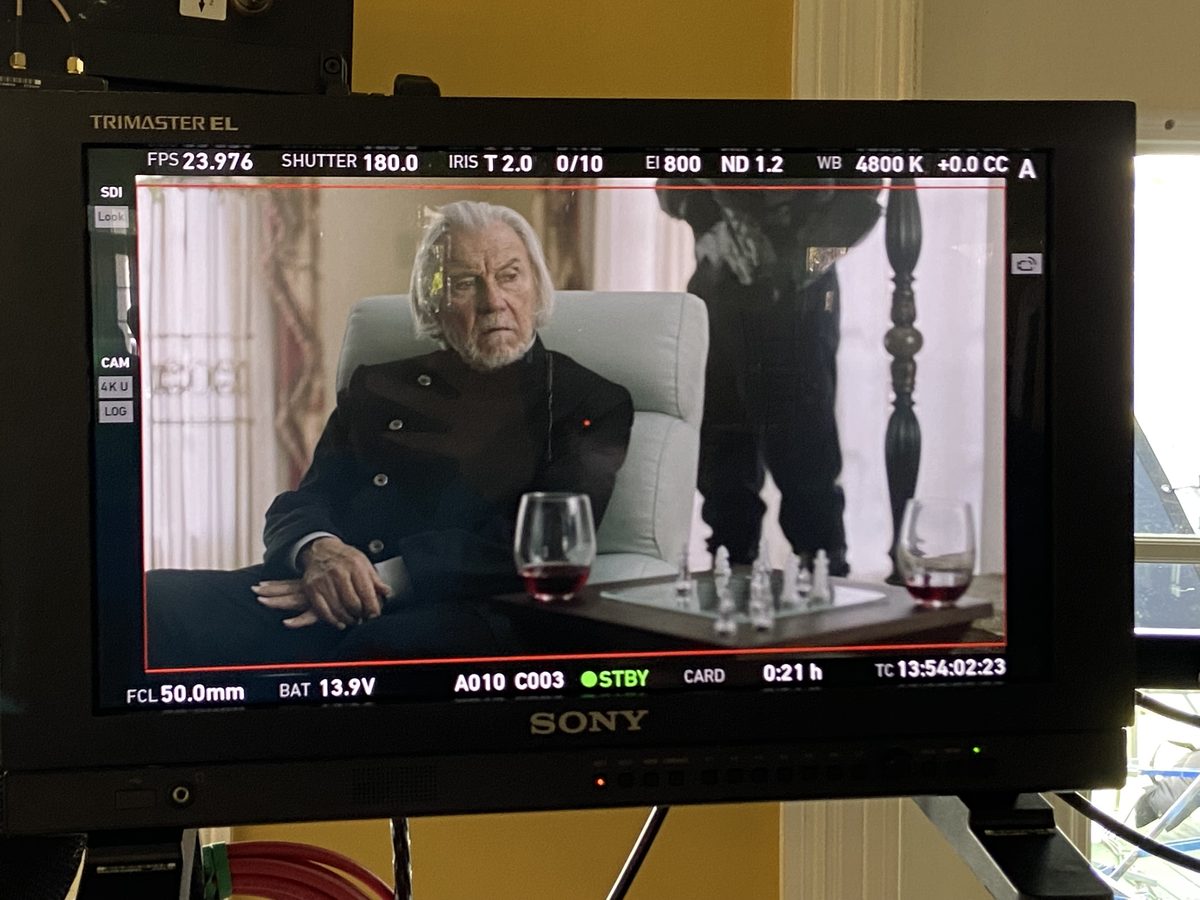
When it came to the more technical challenges, Vandewal notes that this project involved a fairly standard approach. However, the challenges on Kill Code instead revolved around limitations due to actors’ schedules. “Harvey Keitel and Tyrese Gibson are of course both well known actors and Harvey was around 81 at the time we shot the film,” he says. “They both had quite limited time on set and so if you have longer scenes you have to shoot all the coverages for all the other actors that are involved on the set and work with stand ins, then the main cast come in and do their lines.”
Vandewal recalls one such instance when the crew were waiting for a cast member before they could capture a scene. “It was starting to get dark as we were shooting in winter. The whole scene was meant to be shot in daylight, so when they came in around 20 minutes before it got dark it was all hands-on deck. We shot wide open, so it still filled the background and felt like daylight. There was lots of pressure to get that done. I knew exactly what was needed, but as soon as it’s dark it’s much more difficult to achieve as all the streetlights go on. Usually, you just make the foreground a little bit darker, so the background is overexposed by one stop or so and it feels more like daytime when you are shooting around dusk.”
According to Vandewal, adjusting and adapting is more challenging than a technically complicated scene. “Sometimes scenes can change as you are shooting them,” he says. “There’s now also so many tools in post, that it’s very forgiving. I would say time constraint with actors is a lot more difficult.”
Vandewal acknowledges that when he shot his first feature film, The Last Summer back in 2007, he learnt an invaluable lesson which he’s carried with him throughout his career. “During the shoot we stopped and decided to return to the same location the following day,” he explains. “Our producer, however, quickly informed us that this wouldn’t be possible. We either had to get our shot that day, or not at all. That was an amazing lesson. At the time, I thought producers were preventing us from making a good movie, but now I’ve been doing this for 20 years, I completely understand where they are coming from. A lot of producers now hire me for that purpose, getting all the coverage we need in a limited timeframe.”
Vandewal took that same approach when it came to filming Kill Code. “I enjoy the challenge now of being able to pull that off,” he says. “One day we had 57 setups, which is a lot. There was fight sequence on top of that, so there was some fight choreography involved. There was no overtime, so we had to do it all within 12 shooting hours and that was intense. On top of that, I was also passing a kidney stone during shooting. There are always unexpected hurdles that you have to learn to navigate.”
By Oliver Webb
Images Quiver Distribution and Filip Vandewal