
Capturing the Magic of Mermaiding: Nastasja Saerens on lensing Miss Mermaid
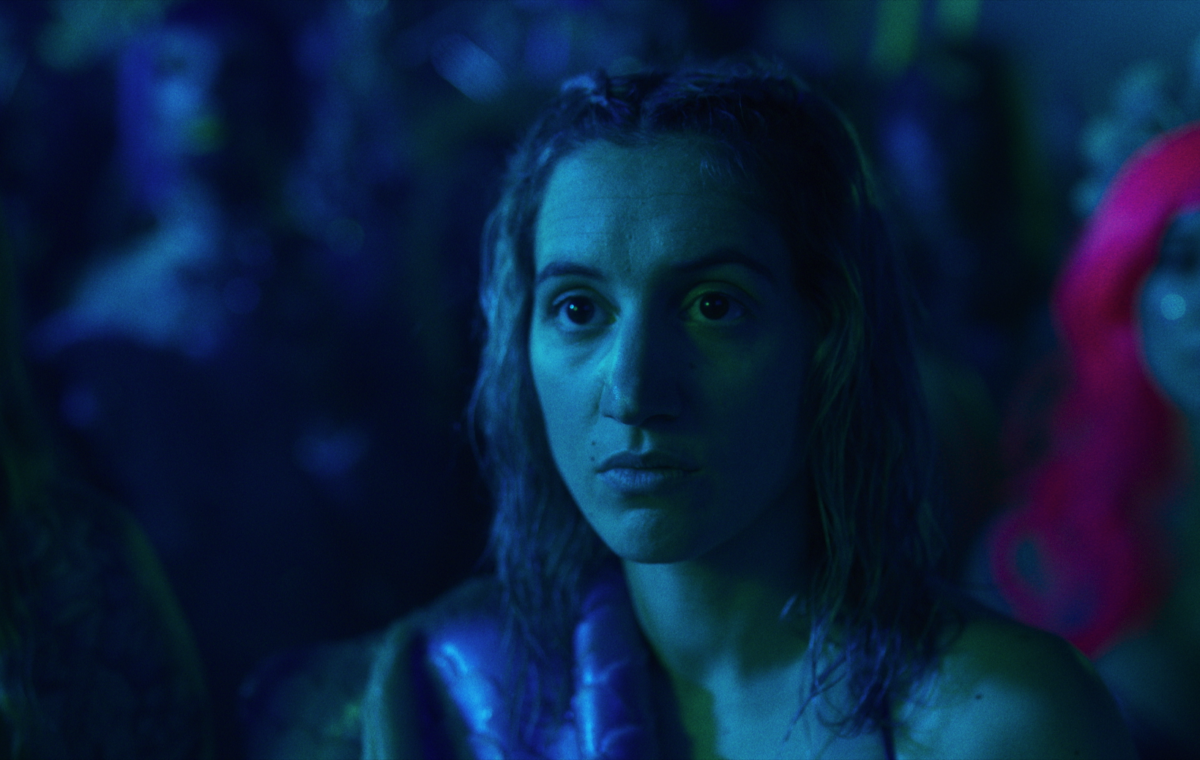
After a painful divorce, Fanny (played by Aloïse Sauvage) continues with her life at a fish canning factory, until she crosses paths with a professional mermaid influencer. She then decides to take the plunge into the world of mermaiding. Nastasja Saerens served as the film’s DOP.
Saerens previously worked with director Marion Verlé on the documentary A L’est De Nos Memoires. Around this time, Verlé was working on another documentary with Pauline Brunner about Alexia, the mermaid of Fécamp. Also titled Miss Mermaid, Alexia escapes her daily routine by practicing “mermaiding” and entering the Miss Sirène France contest.
“Once they finished writing the feature, Marion remembered me, and she and Pauline contacted me for an interview for the feature version of Miss Mermaid,” begins Saerens. “We immediately connected over the desire to embody the gradual liberation of Fanny, the film’s main character. We also talked a lot about what the film could express in terms of feminist emancipation.”
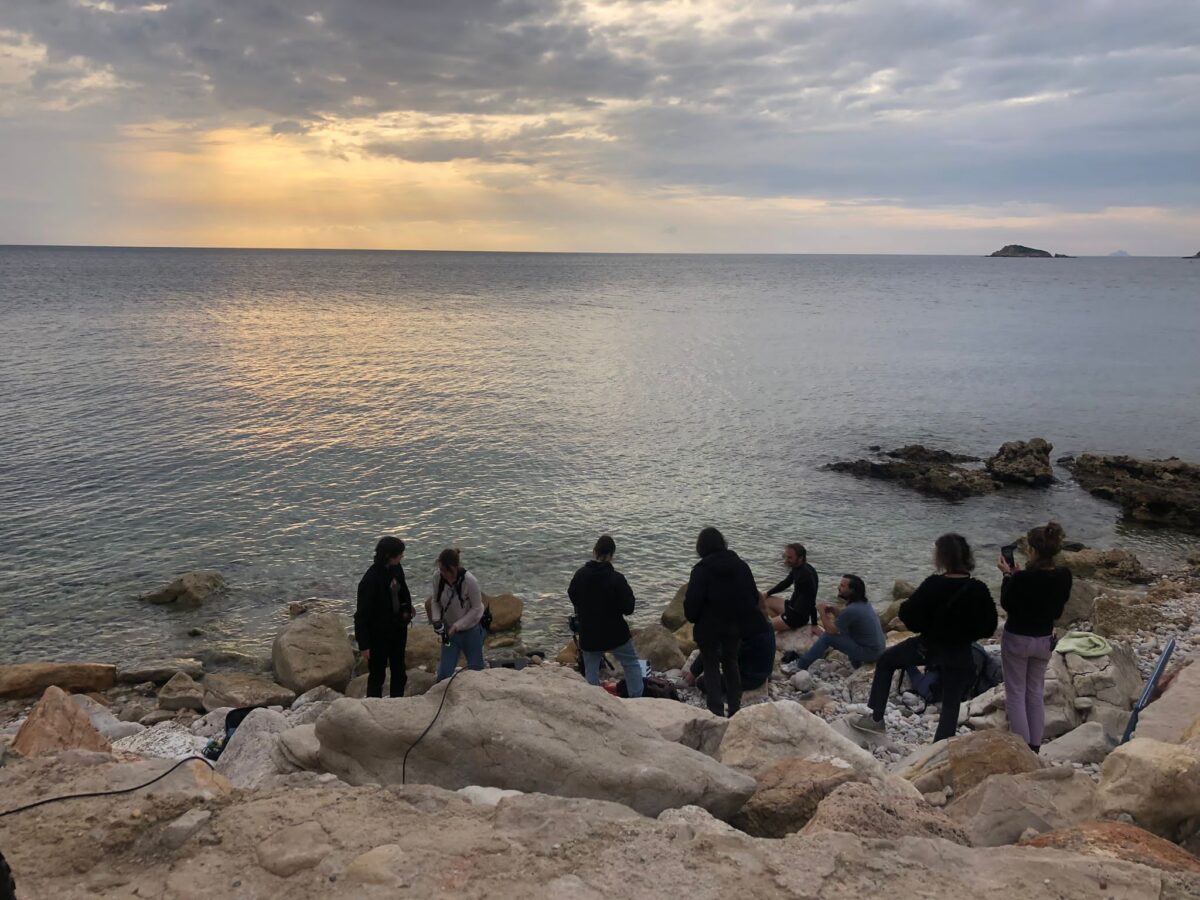
When it came to initial conversations about the look of the film, framing was one of the main focuses. “At the beginning, we spoke about not just the framing, but the camera setup that would best accompany Fanny and tell her story of emancipation. We researched lenses that best suited her portrait. We also wanted to embody the idea of trajectory in the way we filmed her, moving the camera alongside her. We wanted a lot of movement and displacement, which allowed us to justify a constantly moving camera; to embody this idea of a personal journey.”
Initial ideas about the film’s colour palette were also quickly discussed; in particular, the desire to explore the shades of blue found at the seaside in Normandy.
“The colours and the marine environment were a major topic of discussion,” adds Saerens. “We talked a lot about Fanny’s mermaid tail, and the overall colour scheme of the film. With Julie de Beauchamp, the production designer, we created an evolving moodboard, starting with the cloudy, grayish hues of the Normandy coast and evolving into an iridescent aquatic world.”
This allowed Saerens to understand how to develop the lighting with Laetitia Duvert, to respect this desire for evolving colours. “We envisioned a soft, cloudy atmosphere for the beginning of the film, which then evolves into a sunnier, more contrasting world, conducive to saturated colours.”
Saerens set up trials at Panavision to test the mermaid tail with the moods and makeup that they were considering. She wanted the film’s palette to reflect the mermaid tail’s palette.
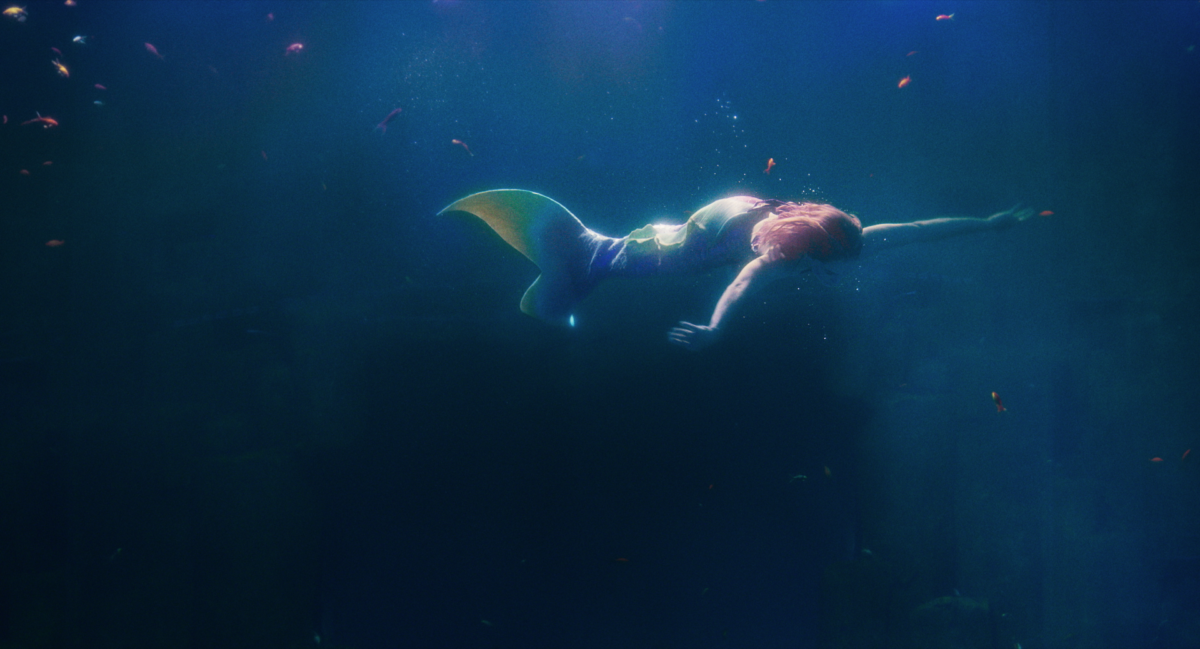
To respect the progression from muted tones to saturated colours, Saerens envisioned softer atmospheres that gradually build towards contrasting ones. “We also discussed the costumes extensively with Marine Galliano. The world of mermaiding was reflected in Fanny’s costumes, even at the beginning of the film, to foreshadow her transformation.”
Makeup also played an important role in documenting Fanny’s transformation. “We chose directions of light based on the makeup and worked around the texture of the image so that the iridescent aspect of the makeup would gradually emerge.”
In terms of visual references, Saerens drew a lot of inspiration from the world of existing mermaids to design the brilliance and colour palette of the film and the lighting. For the atmosphere and the framing, films such Aftersun (Charlotte Wells) and Party Girl (Marie Amachoukeli, Claire Burger, Samuel Theis) were discussed. Saerens wanted to find a balance between the film’s social grounding and its “sea tale” aspect.
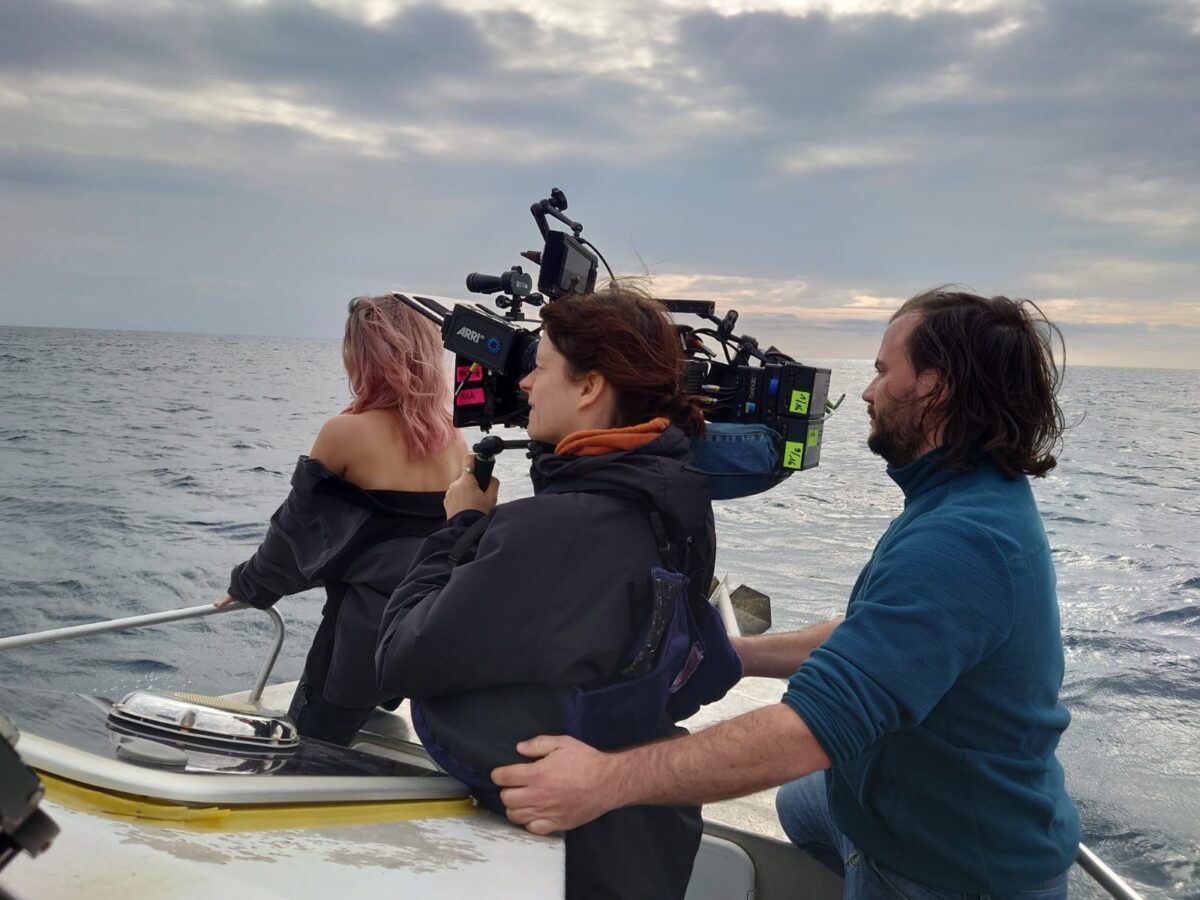
Saerens opted to shoot the film with the Alexa Mini LF. “I wanted to work with a full-frame camera to allow us to open up the frame as much as possible at the end of the film, especially in the sailboat setting, which was very cramped,” she explains. “I really like the Alexa’s rounded colour rendition, which would contribute to the film’s comedic aspect.”
Extensive lens testing was done in preparation for the film, before Saerens settled on the Panaspeed lenses. Their bokeh and sharpness were ideal for filming the iridescent effect of Fanny’s fins and the subtle glitter in her makeup. “However, I found them to be very sharp, so I ended up adding a diffusing filter in front of the lenses,” she adds. “For the night sequences, we chose a vintage “honeycomb” filter, which gave the shimmering surfaces a scale-like appearance.”
The marine and underwater scenes were a major topic discussed very early in pre-production. There were many different underwater locations: the sea, a diving pit, an aquarium in Paris, a swimming pool, and a famous tank, which required careful consideration in terms of proportions. VFX were also gradually considered for these sequences.
Saerens admits that all the sequences in and around water were very challenging to capture. “We started filming with the sequences on the sailboat. The sea was very rough, and the whole crew was seasick. I found myself alone with François Diard, the key grip, to film the first sequence on the boat! Stability was a real challenge. I shot most of the shots handheld on the boat. François found a way to stabilise the shots filmed from the crew boat towards the sailboat using the wave effect of a Steadicam.”
Olivier Borde and Yann Pierre served as underwater DOPs on the film. The sequences filmed with the splash bag in the sea near Fécamp also proved complicated. “Olivier and Yann had to frame with currents, and it blocked us – very often, we couldn’t frame from the correct angles.”
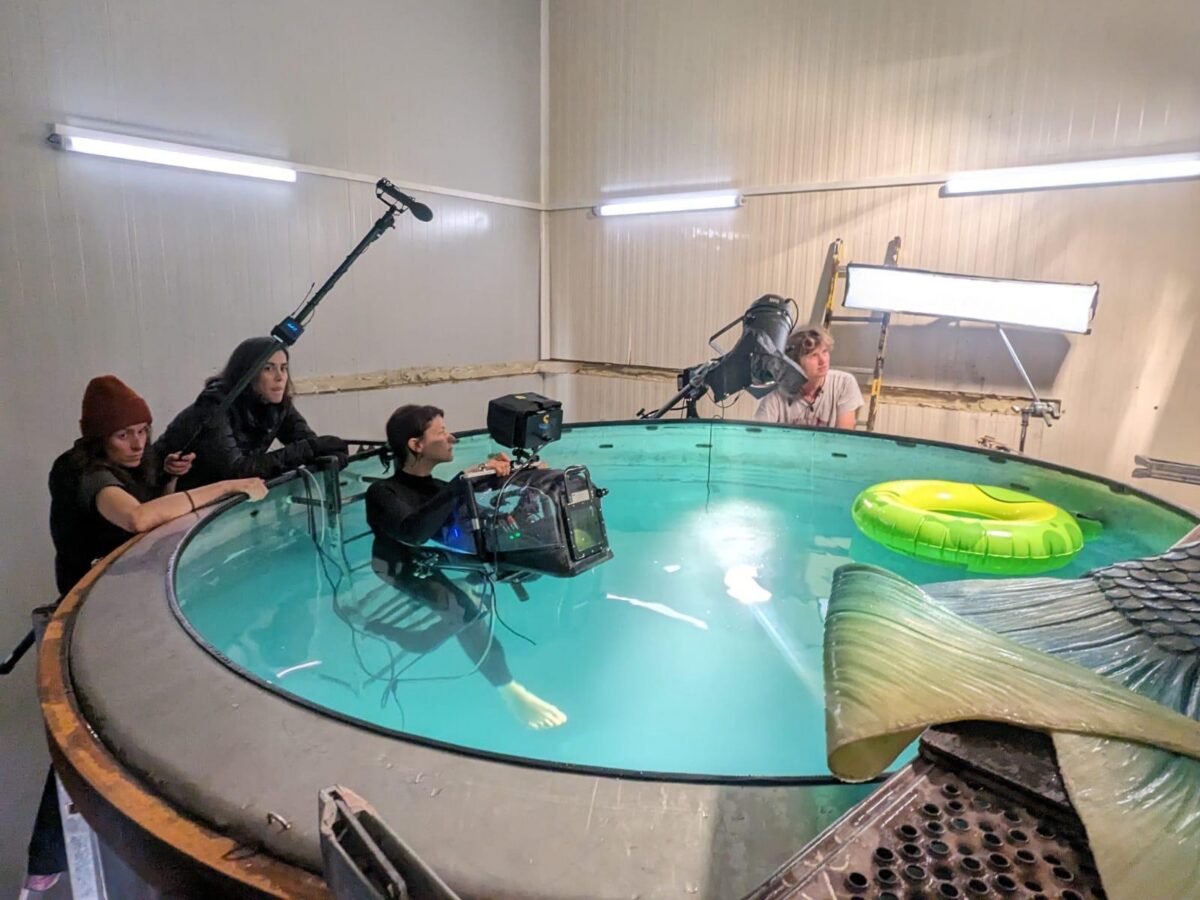
The final sequence in the Paris Aquarium was also very difficult to plan and execute. For safety reasons, it was impossible for Aloïse Sauvage to dive into the aquarium. Ultimately, they had to film the shots of Fanny in a diving tank and then composite them into the Paris Aquarium. The sequences in the tank required VFX and all of Fanny’s appearances in the porthole were filmed in a diving tank.
The equipment used in the water was difficult to manage, especially with the limited budget. “We filmed the underwater shots only when I could stand in the water, and frame without swimming,” explains Saerens. “I operated the camera in the sea and in the tank, with a splash bag. We encountered problems with one camera output and the focus control. It was also difficult to get a decent image on the splash bag monitor because we were sometimes filming outdoors in broad daylight and in challenging conditions. Benjamin Vincent, François Diard, and I tried to accessorize the splash bag as much as possible to make it more manoeuvrable. We added weight and handles depending on the situation.”
Whenever the water got too deep, Borde or Pierre operated the camera. “We worked with two types of housings, and the Subspace was very reliable. We shot with it in the south of France, and we rented it in Marseille. An additional difficulty we encountered for these sequences was that Aloïse and her stunt doubles couldn’t wear wetsuits. Then, the time spent in the water was very limited. We worked as much as possible with stunt doubles to set up the frames, and to be as efficient as possible when Aloïse was ready.”
Filming in Fécamp lasted five weeks, with an additional week in Paris for the aquarium and the diving pool. The open water swimming sequences were filmed in Bandol, in the south of France, over a period of three days.
“I’m truly happy to have worked on this film because its message resonates deeply with me,” says Saerens. “Being able to embody the queer dimension of mermaiding in the visuals and its design was incredibly enriching. The marine world is an inexhaustible source of poetry, and it was a real privilege to be able to immerse myself in it.”
Saernes also enjoyed collaborating with Pauline Brunner, Marion Verlé, Julie de Beauchamp, and the entire camera, grip, and light team, who were all incredibly supportive and creative. “Everyone was captivated by the symbolic of the project,” she concludes. “I also loved exploring the hybrid nature of social comedy. Working on this project taught me so much and immersed me in every possible aquatic situation!”
Key Crew
Key Grip: François Diard
Gaffer: Laetitia Duvert
AC: Louanne Lafuente
Electrician: Margot Nahi
Underwater AC: Sabine Rombaut
Underwater unit: Gaëlle Tanguy – underwater unit
Underwater DPs: Olivier Borde and Yann Pierre
2nd AC: Juliette Tilly
1st AC: Benjamin Vincent
By Oliver Webb