
Framing the ward: Fiona Braillon SBC on shooting On the Edge
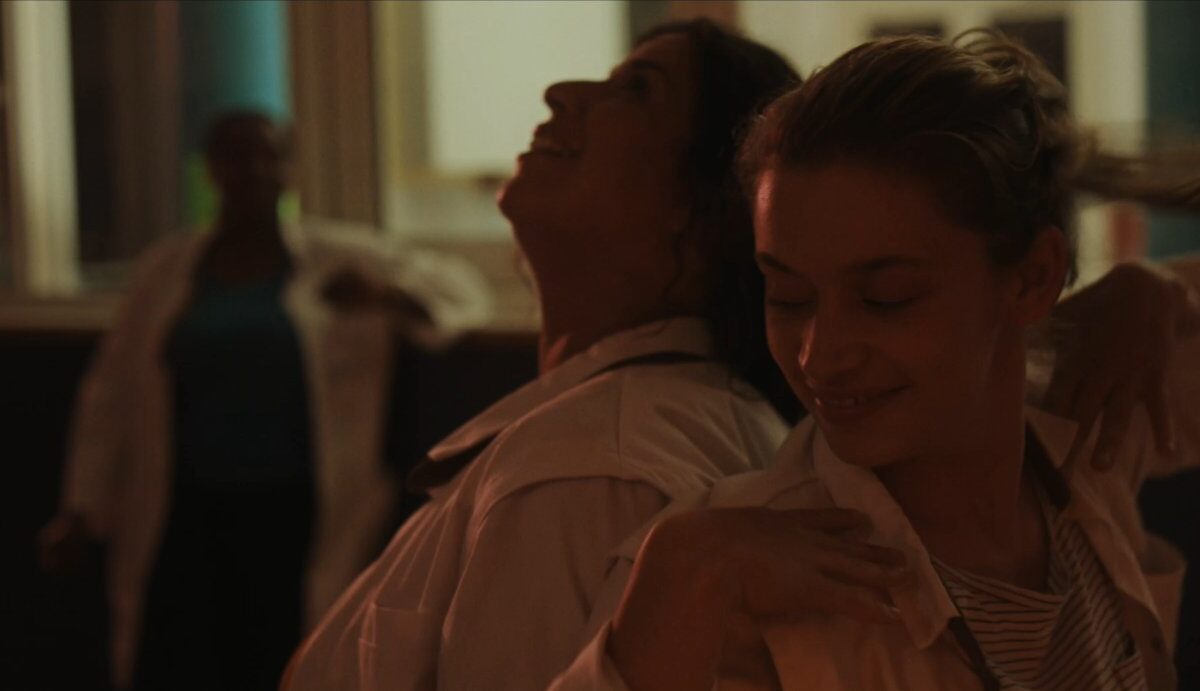
On the Edge (Au bord du monde) follows Alexia (Mara Taquin), a trainee nurse who takes a job in the closed ward of a psychiatric hospital. She forms a close bond with 20-year-old patient Mila (Sasha Deprez), against head nurse Joëlle’s (Nathalie Richard) wishes. Fiona Braillon, SBC served as the film’s DOP.
Braillon first met director Guérin Van de Vorst several years prior to the project and the two soon became friends, always bonding over their love of movies. When Van de Vorst began developing the film with psychologist Sophie Muselle, he invited Braillon to join the project as cinematographer.
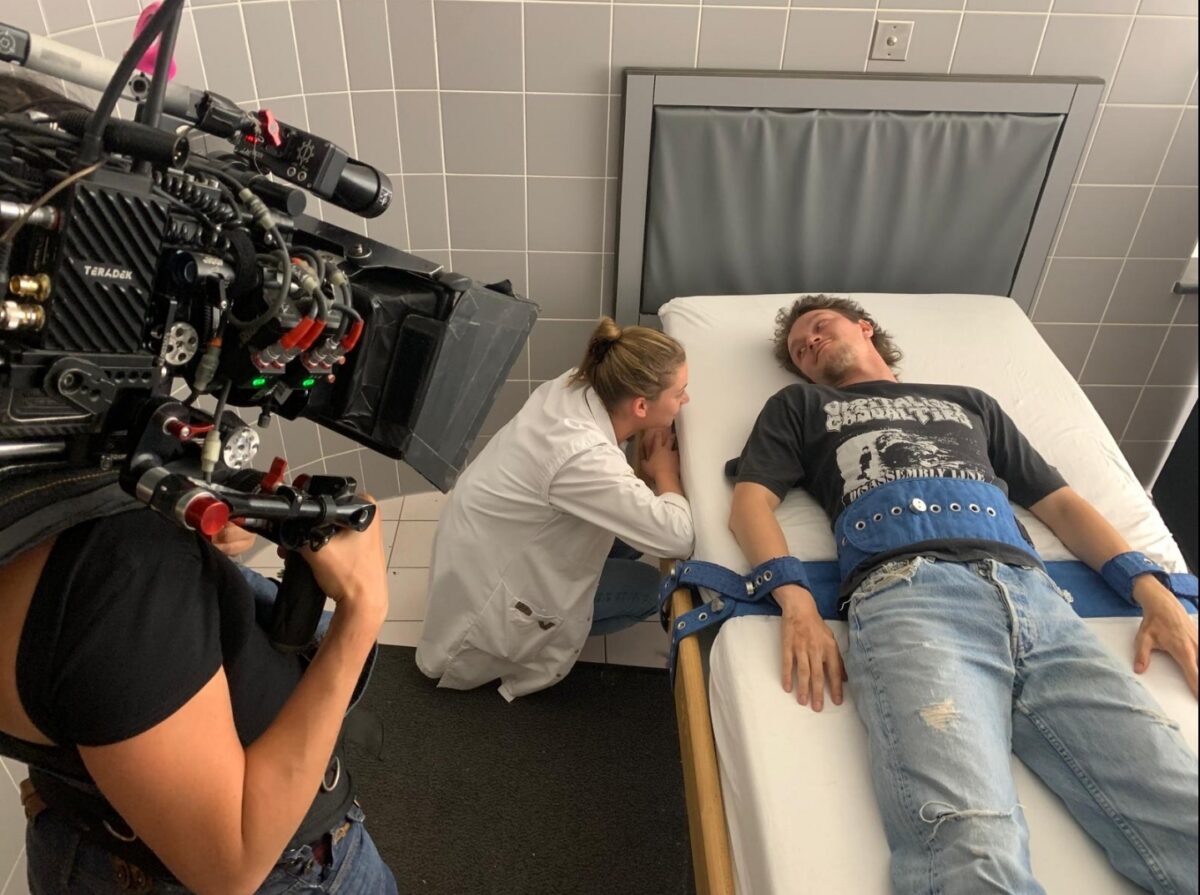
“Sophie also ran a theatre troupe, with people who had been in psychiatric hospitals,” begins Braillon. “Each year she was making a project with that group. When Guérin saw one of the theatre pieces, he was interested in working with Muselle as he’d always been interested in people ostracised by society.”
Muselle and Van de Vorst envisioned the film as a series of carefully choreographed long takes, with early discussions revolving around how to achieve that. “Those ideas were present from the very beginning. We wanted the camerawork to remain faithful to Alexia’s perspective throughout.”
Van de Vorst visited a psychiatric hospital, where he spent three months researching how people lived in that environment. By chance, when production was looking for shooting locations, the same hospital was empty due to renovations.
Van de Vorst spoke about Gus Van Sant’s Elephant as a visual reference. “Andrea Arnold’s Fish Tank was another film we looked at because of the handheld camerawork following actors, also because of the texture of the film stock,” says Braillon. “Goldin’s photography was also a reference. Lots of her work depicts night scenes and people on the fringe of society.”
When shaping the visual language of On the Edge, the concepts of framing faces and using long sequence shots made what lay outside the frame just as important as what appeared within it. “We spoke about what we wanted and didn’t want to have in the frame,” she explains. “The challenge was figuring out how to choreograph the actors’ movements to achieve the effect we were looking for.”
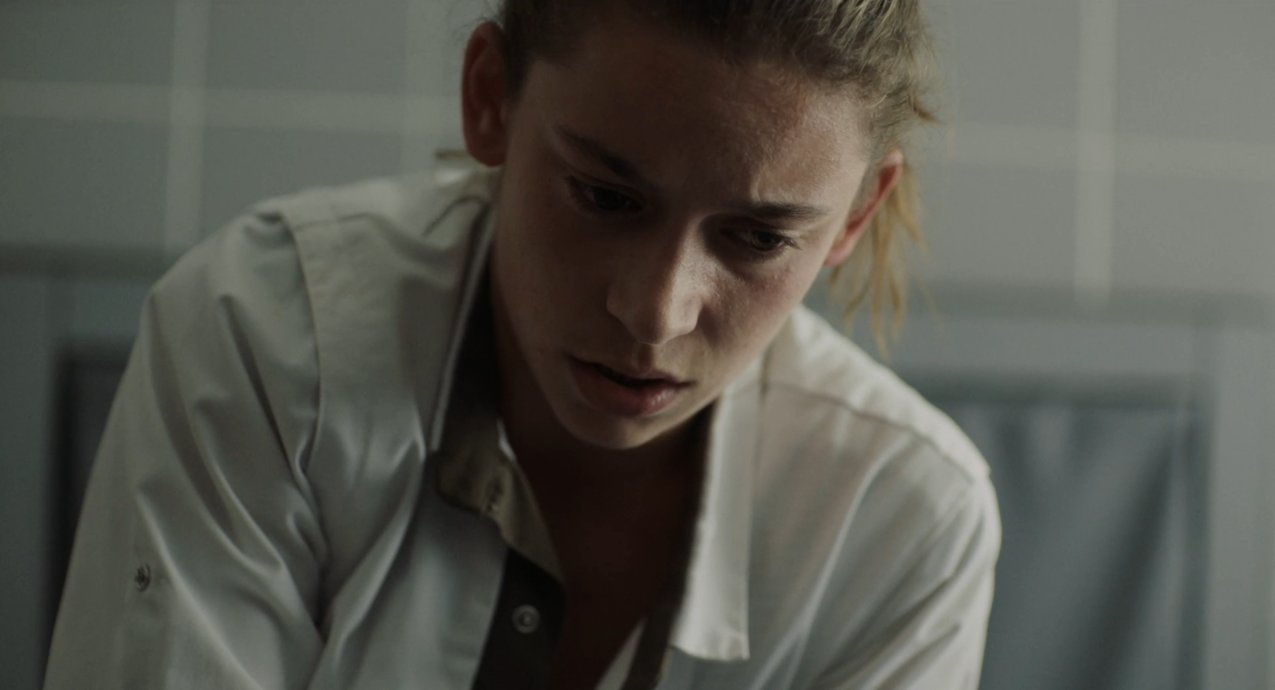
Because the crew had access to the location before filming began, they used that time to develop the sequence shot and edit it in advance to ensure the pacing felt right. “We didn’t build this with the actors on set because we didn’t have the time,” says Braillon. “In a way, it was ideal for the actors to perform the scene from beginning to end, but everything had to be carefully positioned for the camera and it became a kind of group choreography.”
The film was shot across a period of around 25 days with a limited budget. However, production benefited from not having to frequently change locations. “It wasn’t lots of time for our plan of filming takes that were each around four or five minutes long, so we needed to come up with a plan with our actors.”
The production aimed to avoid cutting within shots, and most takes were used in the final film. According to Braillon, the team typically completed two or three shots per day, with each requiring around 20 takes. Although, the opening shot of film took the longest. The shot begins in one building, passes an ambulance and ends in another building. “There were lots of elements to arrange together and the shot took us a whole day to shoot. We did have time to rehearse it.”
Once Braillon explained a scene’s movements to the actors, they would then rehearse a scene several times before the first take. “I had quite a small crew to work with, due to our limited budget and also because of the confines of the location. While we were rehearsing with actors, the lighting crew were figuring out how to light the scene. However, as we were doing short sequences, we could change things that weren’t working to make it as good as possible.”
One of the only sequences to take place outside of the hospital was the swimming pool scene, when Alexia and Mila visit the local pool. For the first part of the sequence, Braillon adopted the same approach, following Alexia closely with the camera. “The sequence was cut down quite a lot. We originally had Mila’s character diving off the diving board, but that was ultimately cut. The underwater sequence was a challenge and we had someone else film that. We wanted a close up of Alexia underwater, but that proved to be difficult to frame, but we managed to do it. There were only a few sequences actually outside of the hospital and this was one of the most technically challenging to realise.”

One of the film’s most poignant scenes sees Alexia and Mila gardening outside before a sudden downpour. Braillon and the crew had originally planned an outdoor scene with fake rain. “It was a bright, sunny day,” she explains. “During one take, just before the fake rain started, a cloud passed in front of the sun, making the rain look even more realistic. Sometimes magical things happen, like this one that made it into the final cut.”
Braillon captured the film with Zeiss ultra prime 50mm lens. The lens allowed Braillon to stay close to Alexia for each shot, while maintaining an intimate perspective. For the first few shots, however, she switched to a 40mm lens in order to show some of the other characters and establish the hospital setting.
The film was shot in chronological order, as it supported the story’s emotional progression.
Braillon wanted a lightweight camera to help with the long, handheld shots. She opted for the ARRI ALEXA Mini, an ideal camera for the film’s specific needs. “It was physically demanding, but I really love this way of working,” she adds.
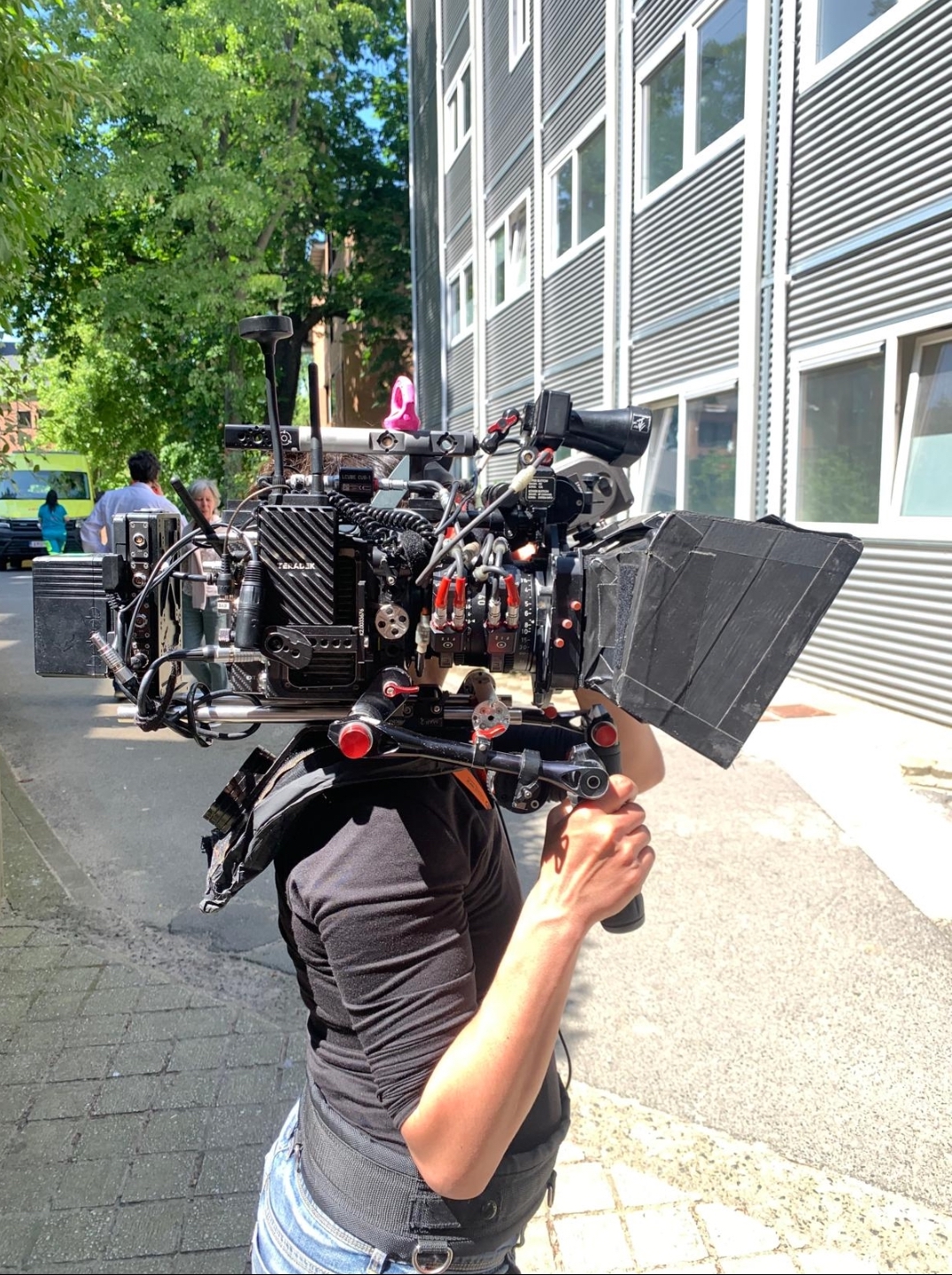
Basile Duquenne served as the film’s grip and played a key role in supporting Braillon with the handheld camerawork. “He’s worked on lots of the Dardenne Brothers’ films,” says Braillon. “He really knows how to work with a handheld camera. It was the first time I was able to achieve more than I originally thought. None of the shots are stabilised in the film. As we were in a hospital, we used available sources. For example, we relied on a wheelchair for lots of shots. Basile really helped me follow the actors and was the right grip for this job.”
Duquenne has frequently collaborated with DOP, Benoît Dervaux who was one of Braillon’s teachers at school. “Of course, when I was making this film, I thought about him and what he taught me about how to follow characters. So, I definitely took some stuff from him.”
In terms of lighting, the obstacle revolved around lighting long takes in 360 degrees. Braillon admits that the crew repainted a few of the hospital walls to also help with this. “I had to keep top light because it was impossible to light another way as everything was in the frame. I also used some gels. We lit from outside as the building was an L shape, so I was putting lights to have more daylight coming through. We wanted a naturalistic approach and not to have the lighting stylised. For example, lighting Alexia and Mila for the rooftop scene was difficult. I was relying on the camera’s sensitivity, although it was still challenging because we needed to preserve the city lights in the background.”
For Braillon, the choreographic way of working was one of her favourite elements of working on the film. “Each take was very demanding because you have to be really present for the duration and you know it’s going to be tough, but I really loved this camerawork.”
Key Crew
UNDERWATER CAMERA OP: Alexandra Brixy
ELECTRICIAN: Armelle Fouat
2ND AC: Ivaylo Kenarov
ELECTRICIAN: Alexandre Michiels
GAFFER: Cyran Van Den Hove
COLOURIST: Evy Roselet
By Oliver Webb