
Serving the Story: Frederic Van Zandycke on shooting Richard Gadd’s Half Man
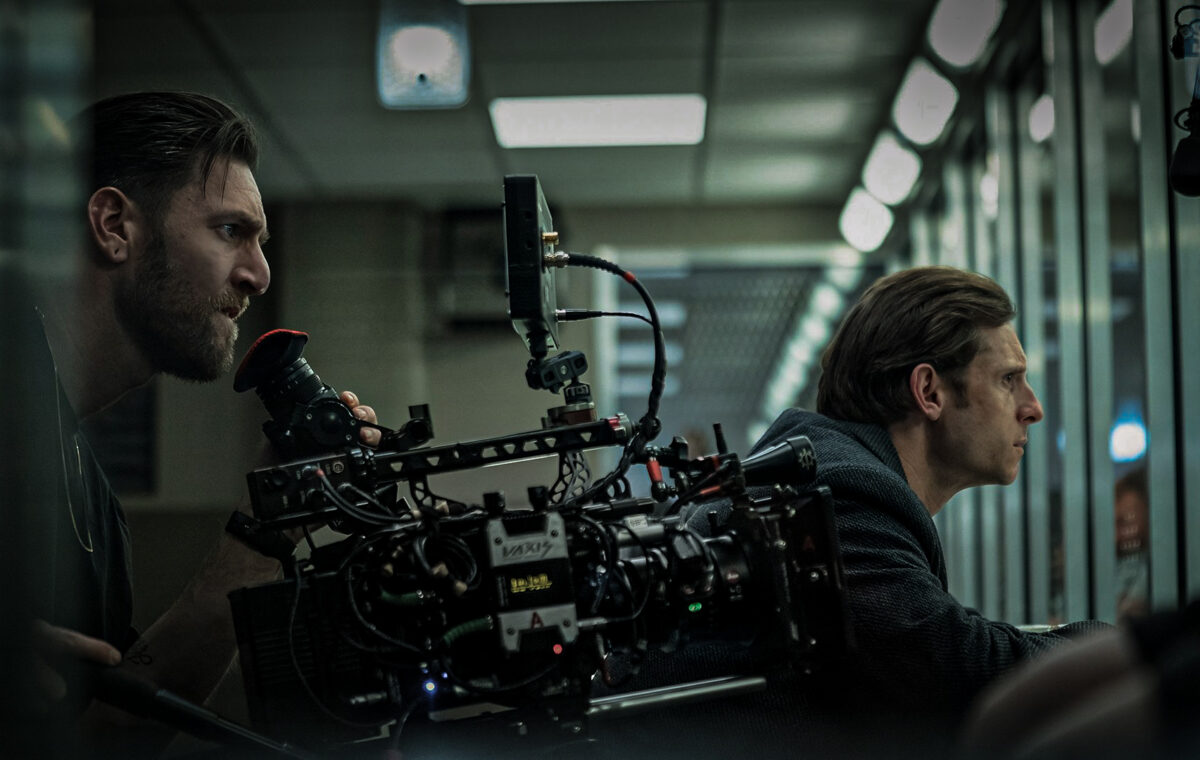
Richard Gadd’s latest series, Half Man, opens with a shocking confrontation before unfolding across four decades to reveal the events that led there. Moving between the 1980s and the present, the show follows Niall (Jamie Bell) and his estranged “brother” Ruben (Gadd), whose reunion at Niall’s wedding sets the story in motion. Cinematographer Frederic Van Zandycke, SBC, shot the final three episodes, bringing a subtly different visual language to the series.
Van Zandycke first became aware of the project through directors Eshref Reybrouck and Alexandra Brodski. After reading the script, he knew it was special and decided to get onboard.
Van Zandycke was hired to shoot episodes four, five and six of the show. “As we jump ahead in time it could look a little bit different from the previous episodes,” he begins. “It didn’t need to be a copy and paste style of what’s already been done. They shot a lot of handheld in the previous episodes and it was the 80s, whereas we were more in the present.”

As the first three episodes follow the characters in the 80s, the latter episodes didn’t have that same feeling of youth and innocence. “It was more carefree in a way,” he adds. “We relied on lots of dolly work and envisioned wide-shots to represent Niall, a small and lonely person in that vastness. Sadly, all those shots were ultimately cut.”
Van Zandycke opted for a bit more contrast and a slightly darker tone compared to block one. “Quite a significant amount was altered in the grade to keep more with the look of the first half. We didn’t ultimately shoot it that way, but that was a bit of process of seeing our images changed.”
The visual approach centred on off-centre framing and grounding the camera within the characters’ world, with handheld camerawork used throughout. “We looked at The Night Of as a visual reference,” he says. “We also had a huge moodboard, most of it stayed as inspiration but we did tone down on the darkness in the grade to blend more with block one.”
Van Zandycke captured the show with ARRI ALEXA 35 paired with Panasonic Leica D Summilux and Angénieux 24-290 lenses. “Some of our scenes had 14 or 15 pages of dialogue,” he explains. “Jamie really nailed every sentence and he memorised every single word the way it was written. I formed a friendship with him throughout the whole shoot because he was in every scene and he was also by himself in Glasgow. We were staying in the same apartment complex too. I was so impressed with him.”
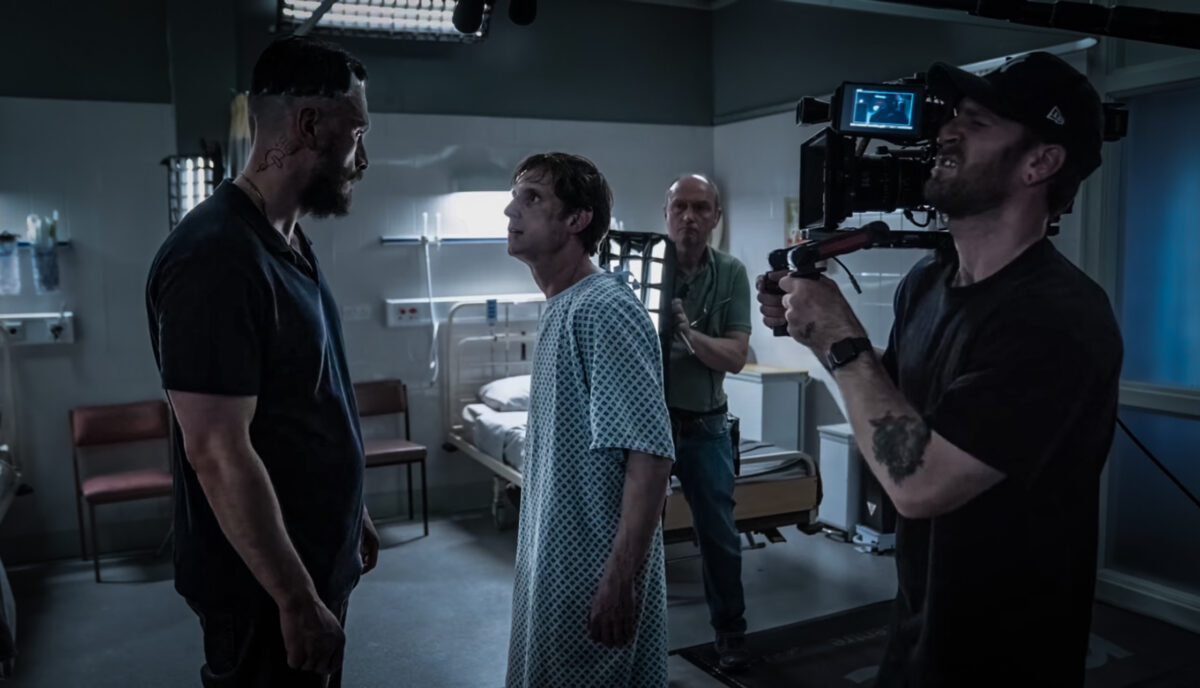
He points to the hospital scene as an example of Jamie’s commitment to the role. They only had one day to shoot the whole scene, which was around 16 pages and also involves a fight. Van Zandycke admits it was a huge battle to get that done. “Having that relationship with Jamie was really helpful. We ended up with a choreography which didn’t involve having to keep changing lights. We made it work by having Jamie and Richard stand in certain positions and they really went along with it. It made it a lot more doable to capture it in one day and still have a decent look to it.”
Many of the dialogue heavy scenes took a physical toll on Bell, who was relieved when it came to varying it with a sex scene. “It was something different for him and he could breathe a little. Niall’s character is wallowed in self-pity and it was very hefty to play. We always follow Niall too, so we tried to explore what that could be like in each episode.”
Van Zandycke acknowledges that he had a degree of creative freedom on the project. “The director and I prefer not to do loads of close-ups, but when we do it was only for specific moments so you can emphasise something. It’s more intense that way; if you have close-ups from beginning to end, then a close-up doesn’t really stand out. Ultimately, we needed the close-ups as we were told to use them, so we just approached it in the way we would normally.”
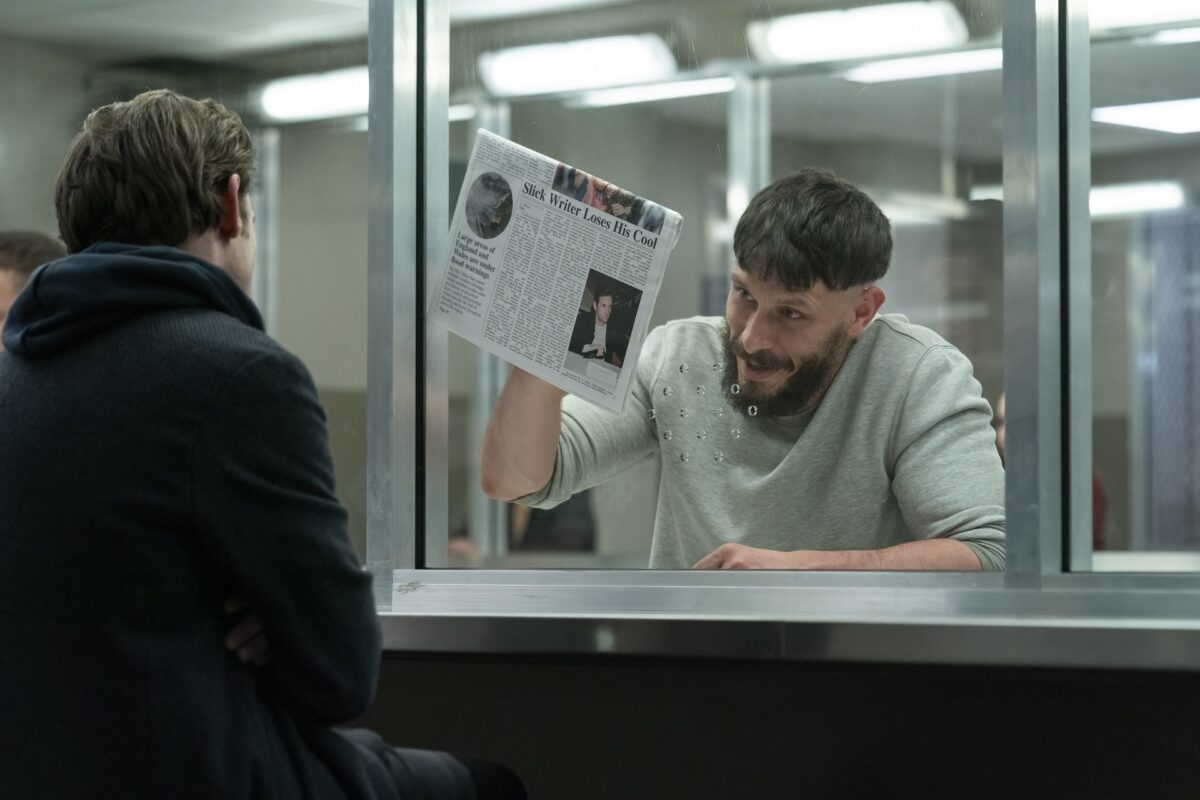
For each dialogue heavy scene, there’s a very firm two shot according to Van Zandycke. “Ruben is this imposing figure and Niall is very small,” he says. “I opted to de-frame the close-ups so it’s more of a negative space. It makes you feel uncomfortable in a way as well because there’s not a lot of room to breathe. I maintained that throughout the three episodes. You probably don’t really pay attention to it, but that’s subconscious. On the other hand, Richard really wanted to be on top of the characters. He really wanted the close-ups, so we played into that.”
One of the main challenges was lighting the exteriors, as much of the show takes place at night. Van Zandycke points to the scene when Niall goes to Ruben’s house to stake it out. In reality, it was much darker than the final result we see in the show.
“I don’t like to approach scenes with a big moonlight setup,” he continues. “Across all my projects, I try and stay away from that unless it’s in a forest and you don’t have any other options. I always try to look for what is there and what I can I use. It’s about solving it practically without this big moonlight source that lights up the whole space.”
Ruben’s house was located on a dead end street and to add to the challenges, it was also pitch black at night and the streetlights weren’t working. “There was nothing really there and there wasn’t any room for a big machine. We didn’t have permission to block the street. In Scotland it’s really difficult to get permission for putting something on the street, especially if you want to move it. Sometimes you want to move things around for example because it looks better somewhere else. It was very difficult and I knew it would be a big challenge, but we just had to get creative.”

Van Zandycke returned to the film Prisoners during the shoot. “There’s a scene with candlelight vigil and everyone is walking with candles,” he notes. “There’s a character that looks suspicious and he ends up running away from a cop played by Jake Gyllenhaal who follows him. They run away from the candelight and end up in backyards and backstreets, with trees and houses. That scene always stuck with me because there’s no moonlight and nothing except the houselights and that’s what ultimately lit the scene.”
Van Zandycke took the same approach for Half Man, looking at all the houses on the street and how he could utilise them in terms of lighting. “We didn’t always show the source either. Sometimes we hid it in a bush, but just so it looked like it was coming from the house. So, I started with that and then I replaced all the streetlights with lights from us that we could control, so there was a base of streetlight. It was still very dark, but you could then see where the light would come from. That gave me the freedom to push extra light in that made sense, which didn’t feel out of place.”
An overhead light, consisting of 40 Astera tubes was rigged for the scene. “They were all in a grid formation, which we put up very low and I kept it around 5%. It was just to fill in a little bit of the house, or the bushes to have something as a backup if we ran out of streetlights.”
At the end of that scene, Niall runs towards the darkness as he can’t unlock his car. He disappears over a wall and into a nearby garden to escape from Ruben. “There was a small shed there and I placed a small dash light on top of the garage and we made it look like a motion sensor light, so as soon as he runs to the garage the sensor goes on, but we remote controlled that. Elements like that were really useful to give an eerie feeling and it ended up being more confined.”
Niall then scrambles into the neighbour’s garden and goes into the dollhouse for cover. “We shot it on location, but more than 100 miles from the previous scene, with about two months between shoots. Again, it was pitch black, we couldn’t bring in big lighting rigs, and everything was last minute. I put a big tungsten bounce in the neighbour’s garden to feel like light spilling from the house. That single source lit the whole scene, and it ended up feeling very natural.”
The interior of the doll house itself was an additional location required for the scene. “We shot Jamie’s scene in the barn where they have the fight at the end. We placed the doll house in the barn and we blacked everything out and tried to light it the same way. Inside of the house there was barely any light, so it was a big challenge to find a light source from outside and we wanted to keep it as realistic as possible. When Niall peeks through the curtains there was a little bit of extra light coming in and we had projector spots where we could shape the light. It was a bit of a puzzle to make it blend in well and look natural. The final part of that scene is when Niall returns to his car and crashes. The whole scene took about a week to put together.”
One of the unexpected hurdles of that scene was actually when Niall goes to Ruben’s car and removes the Mercedes star ornament. “Eight months later we were told we couldn’t show the Mercedes badge for legal reasons,” he recalls. “We had to recreate the shot in another location, match the lighting from months earlier and even put Jamie in a wig because he now had a buzzcut. It’s one of those things nobody notices, but it took a huge amount of work.”
The shoot lasted 54 days for the three episodes, with two days added. Much of the footage ended up on the cutting room floor. “You end up seeing some of your favourite scenes being cut out, but that’s how it is working on series sometimes,” he says.
Van Zandycke, however, relished the opportunity of shooting impressive scenes. “This is a very dialogue-driven show and it isn’t about fancy camera movements,” he concludes. “That was clear from the very beginning. There’s not lots of talk about cinematography on this show because that’s not the point. I would have loved, of course, for it to be more visual, but it was about serving the story and telling the story. It’s nice to shoot something that you really believe in where you’re impacted by the performance. You don’t always get to see that live.”
By Oliver Webb
Images HBO