Diego Dezuttere on bringing warmth and fantasy to the world of Professor T
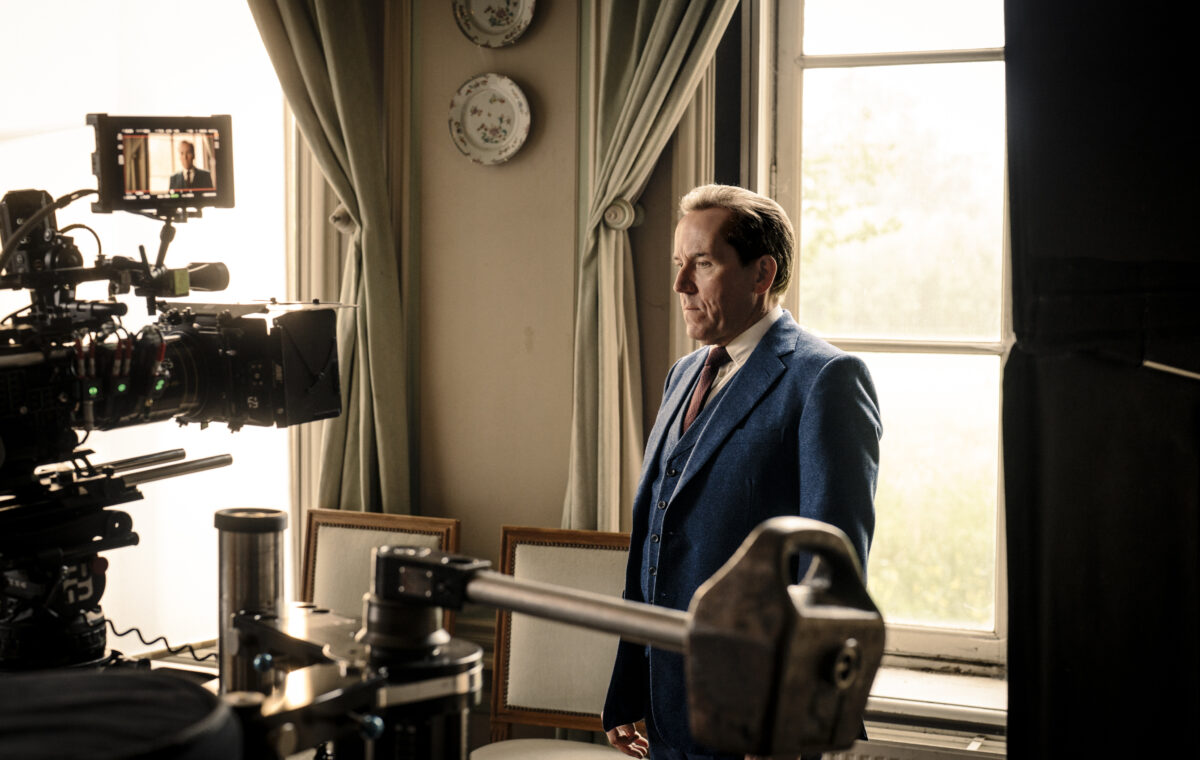
Starring Ben Miller, Professor T is a crime drama series set in the heart of Cambridge. Professor Jasper Tempest is a flawed genius lecturer at Cambridge University, who unwittingly becomes an advisor to the police when he is caught up in a mysterious crime at the university. Dezuttere served as cinematographer on seasons four, five and six.
The show is a remake of a Belgian show of the same name,originally written by Paul Piedfort and starring Koen De Bouw. In Belgium, there were only three seasons, but the UK version has surpassed that and another season is already underway.

“Stephen Brady got involved from season four and wrote the subsequent seasons,” begins Dezuttere. “The original is quite different. There are some of the same elements and the OCD is very important in each version. I do think that the UK cinematography is richer. The Belgian one is more desaturated, but it’s not that warm or rich like the UK version.”
Dezuttere has known director Dries Vos since they were students and the two also recently collaborated on The Couple Next Door. “I worked on another Belgian show, where I used Tungsten lights with Molebeams and created a warm look. I think that’s the reason why Dries approached me for this project.”
The third season of Professor T revolved around the professor in prison and Dezuttere admits the show became quite dark in comparison to the first two seasons. When he joined the project in season four, the conversations centred on returning to the aesthetic of the inaugural season.
“Dries believed that the third season was more distinctly different to the rest of the show than it probably should have been,” he adds. “So, we wanted to emulate a style similar tothe show’s first season, while giving it a more contemporary look. As a show, it’s not that dynamic in the sense that we shoot it with a dolly and it looks quite classic, but it’s really more than that.”
For Dezuttere, sometimes it’s more of a Steven Spielberg approach; well-chosen camerawork and camera movement. “That’s what makes it interesting for me,” he says. “I like doing it that way because it’s not shot reverse. I brought more Steadicam to it too and working in ways I like to work.”
The crew went to Cambridge for one week to shoot some exteriors for season four, which mostly consisted of the rooftop sequences (i.e. the professor’s favourite spot). For season five, however, they didn’t go to the UK at all. “It was all done in Belgium,” says Dezuttere. “We do have some rooftop sequences in season five, but they were done in an LED volume. We had four 360-degree angles that were shot in Cambridge.

It’s actually a mixture of several rooftop views, with special Cambridge landmarks, but it’s all built in a studio in Belgium. I expected us to reuse it for season six, but we don’t have any more rooftop scenes. They’ve already ordered a seventh season, so I hope to return to those scenes.”
Despite most of the production taking place in Belgium, the country served as a stand-in for Cambridge. One of the many challenges that involves is convincing audiences. “I said to the producers that I still don’t understand how audiences just accept all the locations as being in Cambridge,” laughs Dezuttere. “The world of Professor T is almost like a fantasy. As a filmmaker you are told this is his world and the viewers buy it, which is great. The Professor’s world is so cool and itlooks very classic, but sometimes you can step away from the path and get creative.”
Dezuttere acknowledges that disguising locations in Belgium as Cambridge is of course a challenge. One of the unexpected hurdles is actually the traffic, with both countries driving on different sides of the road. “It’s hard to navigate as we are unable to show traffic for that reason. We purposefully don’t have many driving shots for that primary reason, but if we do have a driving scene it’s often on a private road and we keep it simple. If you want to show a car, you really need to import one from the UK.”

When it comes to lighting, the show’s identity is very warm and emulates a low Tuscany sun. “The skin tones are not orange, but very warm. We use a lot of interiors with wooden dark brownish elements, so it becomes even warmer and then we have the professor with his blue costume, so it’s really contrasting colours, and that works very well. So, that is something that we try to obtain. We enhance it a little bit, so if audiences tune in, they immediately know they are in the Professor T universe.”
Dezuttere admits that the show having its own unique identity is very important for the directors. “Our art director has also worked on every season, so he really knows what that world is and it’s a nice collaboration. We also have great locations, props and costumes.”
Dezuttere previously relied on lots of Tungsten light, which is ultimately more expensive and requires bigger generators. For the latest season, he’s switched to LEDs and Nanlites. “It’s no longer as power consuming,” he says. “The Nanlites are fully controlled and dimmable, even the colour temperature is easier to control which is a big advantage.”
The Nanlites also came in useful for some wet downs throughout the shoot. “We did some wet downs in a spot in Antwerp. It was at a cross point of several streets. We used a big cherry picker with Vortex and Nanlites on top of it and it beautifully reflects the moonlight on the street. The wetdownsmake it so magic and cinematic.”

Dezuttere has opted for the same camera and lens package for each season he’s worked on, but added the macro lensspecifically for the latest season. “We use the Cooke anamorphics, but the full frame,” he says. “It started with a six lenses package, but now we have seven. It’s very handy to have the Macro on set and we use it daily, especially as one of our directors likes to open a scene with a detail shot.”
There are roughly 60 shooting days for six episodes, which Dezuttere stresses is a comfortable amount in terms of time management. “Most of the time it’s talking heads, especially when you are in an interrogation room. We don’t have a lot of action scenes.”
Unlike the previous seasons, the latest seasons relied on visual effects as Professor T’s double was introduced. “We shot several scenes using face replacements and motion control. In a number of scenes, the professor and his double have physical interactions, so it wasn’t as simple as using a split screen. For example, they pass a bottle of wine between them, or the double is ironing a pair of trousers and then the professor takes them and puts them on. It’s reinventing the Professor T show. After a few seasons you know the drill and it can be repetitive, but they gave it some extra salt and pepper.”
When ‘the double’ appears, it’s the Professor’s fantasy and seen from his point of view. “It’s interesting when you cut to a wide shot and the professor is interacting with other people, but then the double has disappeared,” says Dezuttere. “Ben Miller loves to play the double because after several seasons it’s something new for him and cool to play with. At the start of the season, the double is essentially what the professor isn’t, so he’s flamboyant, very naughty in a way and charismatic for example. They become friends and when the double gets drunk towards the end of the season he becomes annoying.”

Dezuttere admits he loves working with the cast, as they all really know their characters off by heart. “As a Belgian DP, I also like the choice of locations,” he says. “They are richer for Belgian norms and standards, so it’s very interesting to do. I also love the style we’ve implemented and the warm low sun that penetrates the sets. I have lots of support working on the show.”
Dezuttere particularly enjoys working with the fantasy elements. “I really like when the professor puts on a record on the turntable, and then something starts to happen and we step out of reality. Most of the time we are finding a way to get out of realism. That’s something to embrace.”
By Oliver Webb
Pictures Toon Aerts