
Dries De Clercq on the night shoots for Nachtvlinders
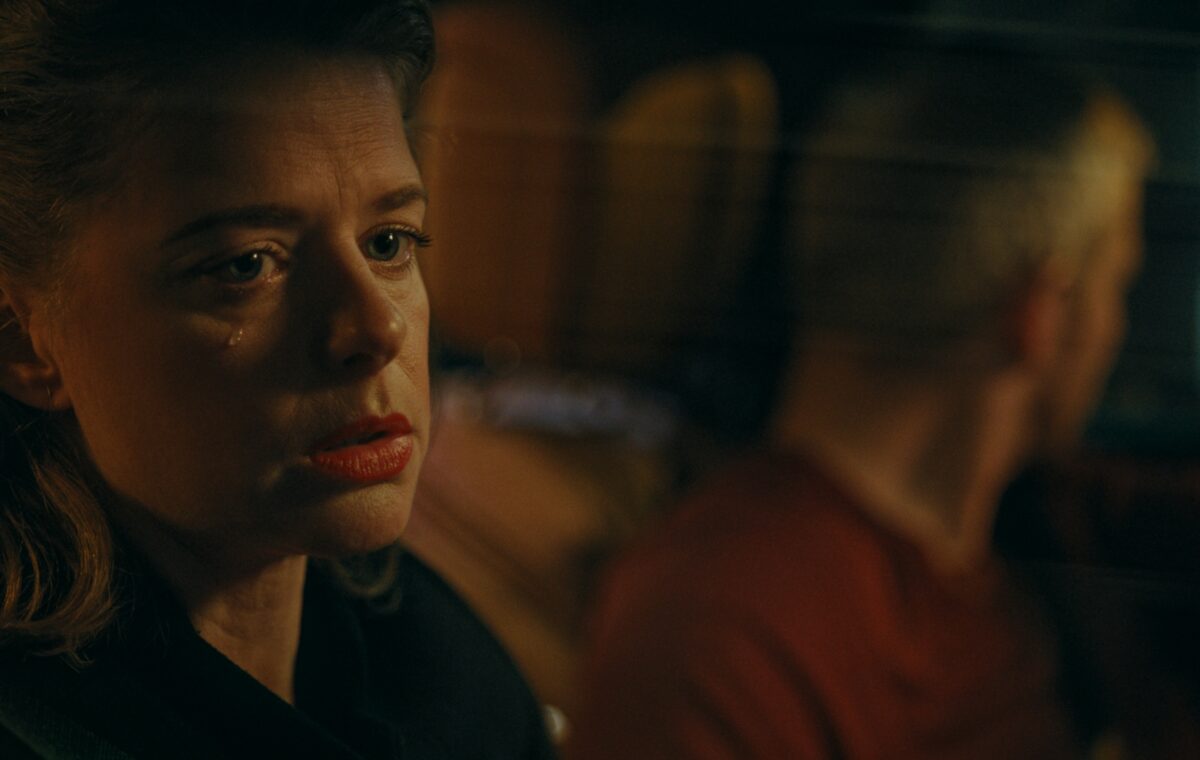
After his release from prison, Dylan (Aimé Claeys) is forced into one last heist at Brasserie Papillon to repay an old debt. There, he meets Margot (Maaike Neuville), sparking an unexpected connection. Directed by Indra Siera, Nachtvlinders was captured by Dries De Clercq SBC.
After being connected by producer, Nathalie Van Schelvergem, De Clercq and Siera met via zoom and then met up in person. “I only knew Indra by reputation and we hadn’t worked together before,” begins De Clercq. “After the meeting, I decided to do the project.”

Initial conversations about the film revolved mainly around scenario. The script is loosely adapted from the 1961 novel Le monte-charge by Frédéric Dard. The novel focuses on a man named Albert who is drawn into a mysterious situation involving a woman and a disappearing corpse in Paris during Christmas time.
In terms of the look of the film, De Clercq and Siera knew it would take place almost exclusively at night. “We really wanted to establish a look that payed homage to that era, but it also had to be a character, constantly creating tension,” says De Clercq. “We spoke about lots of references, including the works of Francis Bacon. He’s a master in creating depth with darker colours. So that was the style that we were going for. We also discussed lots of 80s and 90s movies.”
Due to budget constraints, De Clercq explains that he had to be careful from the beginning when approaching how to light the film. “We knew that we had studio work and had to build the apartment, which was a big part of our budget. We opted to do wet downs and we had someone who was just out of school who did those for us every night because we didn’t have SFX.”

The wet downs proved to be an effective tool during the shoot. “When you do the wet downs, you immediately get these sparks from every light that you put in the frame,” says De Clercq. “That was a major help to do our exteriors and we added a lot of smoke to give it the atmosphere. The idea for the smoke really came from those old New York City night movies, as well as movies such as To Live and Die in LA where they constantly use smoke. We adapted that to create a nightly atmosphere.”
Scouting locations was an essential part of pre-production. “We saw loads of different locations, just by wandering around Antwerp and Brussels” he explains. “Initially, the story was that the main character was getting out of jail, and we needed to shoot in front of a prison, but we found that to be a little bit too cliche, so we thought of the idea of him getting off a train instead and then we found out about the location in Antwerp.”
Lots of locations were scouted on the basis that De Clercq could use a lot of practical lighting sources. “Then we could just adapt from what was there and add some neon tubes or sodium lights for example,” he adds. “I only used a cherry picker twice to add strong backlight. We wanted the nights to be really dark and there’s lots of green in the shadows. It was ultimately about being clever.”

Working this way ensured that production didn’t need to rely on lots of lighting gear. “If you work with the smoke and the wet downs then it immediately creates a good atmosphere. We avoided using very big setups at night to move fast. I only used Tungsten lights, no HMI’s or daylight whatsoever. That was first time I’ve done that.”
Another example of when De Clercq relied on available light was the opening sequence when the train approaches the station. “The city lights in the background created an amazing depth and in combination with some Vortex lights that were placed all the way down, behind the trainstation, we lit up the glass behind our main character. It blended nicely with the red neon light that was already there from a gas station. We had another Vortex to get some extra fill, you add some smoke and you’re all set. For the first encounter with the 5 boys, we attached some old sodium lights up along the roof that was next to the path to create an eerie feel and monochrome lighting. It definitely helped to add some harshness to that scene.”
The film was captured across a period of 28 days using ARRI Alexa 35 paired with Leitz Summilux-C Series Lenses. De Clercq recalls having to work quickly due to the number of required shots. “Indra is somebody who wants to do a lot of shots and a lot of pick-ups and close-ups, so you really need to move fast. I couldn’t afford taking up all this time. The Summilux-c series are lightweight and are beautiful wide open so they accommodated this shoot perfectly”

One of the most visually striking sequences is the firework scene, which also foreshadows the events of the rest of the film. “The apartment was completely built in studio and all the fireworks are VFX. The apartment exterior was a real location in Brussels. During the film you don’t really know where you are and we just needed to match Antwerp and Brussels and combine it into one location.”
De Clercq used Vortex lights and programmed the amount of light required with all the fireworks coming in for the scene. “We did two runs,” he adds. “One was with really heavy fireworks and then one a more moderate trial. From the outside of the apartment, we did the same trick, so used Vortexs again and put in some colour and then ran the program and it looks like fireworks. Then we matched that in VFX.”
Only one part of the outside wall was built like it is in Brussels. “We based part of the apartment on these apartments where I had shot lots of plates on the walls. Then we composed that in VFX on the wider shots. So when you see the two characters looking outside the apartment, or when we do the tilts down when he goes to the other apartment downstairs. That was all VFX and all the walls are put in later.”
De Clercq took photographs for the backdrop in Brussels where they planned to shoot.“We then stitched a couple of them together, added some extra light fixtures in the picture and printed it on a backdrop. In the studio we’d put lights behind it to enhance the practicals onto the set. So, the fireworks are really a combination of the studio, the backdrop and VFX.”

Initially the VFX team thought the fireworks were too much. “That’s why we had to do numerous tests, but the version where we used lots of lights is the one that made it into the movie. The fireworks really takes you into the characters mindsets and the fireworks play a big part in the story as you find out later on in the film.”
The club sequence was another challenging sequence to capture and was shot on location in a church in Antwerp. “We are used to seeing normal looking clubs in films, but we thought it would be nice and different to use this location as it’s not something you would normally think of to stand in as a nightclub,” says De Clercq.
The red cross and the glitter ball were the main attraction added to that location. “Our gaffer Tim Janssens called in some guys from an AV company who build these rigs for parties and we had them build four towers so we could attach the disco ball and some wash lights. We completed this setup with a strong backlight. Our key grip, Jorrit Haas, did an an amazing job on steadicam that day.”
During the scene, Dylan sees Margot across the dancefloor. Approaching the scene, De Clercq explains that Siera likes his actors looking directly into the lens. “In every scene we had shots of actors just looking into the camera like they are looking at each other,” he says. “Some of those made it into the final movie, but some didn’t. We had lots of these in the club scene. They are looking at each other just next to the camera, but also into the camera and we used a combination of both.”

De Clercq worked with colourist Tom Mulder to achieve the specific look they were after. “We knew it had to be dark. We created a LUT to provide an extra extra stop in post, so we had enough headroom to play with in color correction. I decided on shooting raw to gather enough data for our VFX and night scenes and the HDE codec from ARRI helped me achieving this without any extra offload time on set or extra data in post. I always insist on doing camera tests with the actors before we shoot; that way art department, make-up and costume have an understanding on the approach for the shoot. These test are also used to create a show LUT.”
De Clercq stresses the importance of prep which contributed to the professional atmosphere on set. “Robbe Nuyttens, our production designer, Tim Janssens (gaffer)Jorrit Haas (key grip), Alexander Beyne (1stAc) and everyone else did excellent work,” he concludes. “We were all on the same page. When we first met, we were already close to each other and we knew in what direction to go. Despite it was a cold, dark and technical shoot everyone really nailed it on this one.”
By Oliver Webb