
Ruben Impens on lensing Alpha
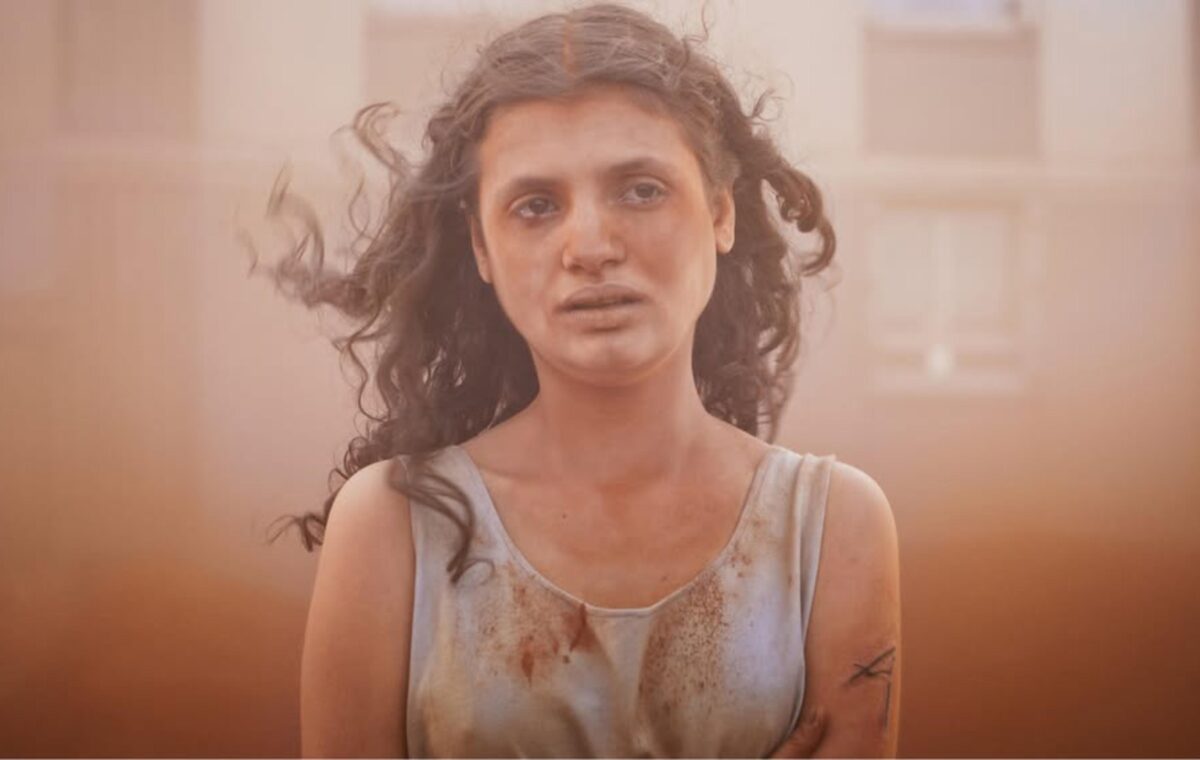
Alpha is a troubled teenager who lives alone with her mother. Their world comes crashing down the day Alpha comes home from school with a tattoo on her arm. The film marks Julia Ducournau’s third feature collaboration with DOP Ruben Impens SBC having previously worked together on Raw and Titane.
Impens admits that while he sees the imperfections of the film, he also sees the quality and craftmanship by a true filmmaker. “It’s a complex script, but we were of course totally aware of that,” he begins. “Some people understand the film right away, some don’t, but the audiences make a puzzle for themselves.”

One example of this is the uncle character portrayed by Tahar Rahim. “His character doesn’t actually exist,” explains Impens. “A lot of people don’t get that and that takes away from the film. It doesn’t then work as it should do. Julia was adamant that we shouldn’t explain too much to the audience. I approached it as if it were a woman’s memory, looking back on her childhood in two different timelines. Julia is a visionary and it’s a shame it was lost on some people, but it’s a very emotional film for me.”
Alpha is the third collaboration between Ducournau and Impens and their way of working didn’t change when it came to their approach for this film. Emmanuelle Duplay, who’s films include Anatomy of a Fall, Emilia Perez and 120 BPM served as the film’s production designer. “We had a great crew,” adds Impens. “It was our first time working with Emmanuelle, which was fantastic. Our production design was good on the previous filmstoo, but this was another level. We also had more budget.”

Much of the crew remained the same from Titane, including VFX Producer, Emmanuelle Carlier, editor Jean-Christophe Bouzy, composer Jim Williams and makeup effects artist, Olivier Afonso. “Olivier did all the prosthetics,” says Impens. “I’m very happy with the whole process. The sequences with people turning into statues proved challenging to define this marble stone kind of look, which was trial and error. We had meetings around how to do that, but ultimately, we had to just dive into that and test numerous things. It was a mixture of SFX, moulding and sculpting in combination with digital VFX.”
Impens relied on ARRI Alexa Mini LF accompanied with Super Baltar lenses for the 1980s flashback sequences and opted for Red Raptor with large format Sigma lenses to capturethe 90s period (the film’s present). “One of our looks, I’d describe as similar toTrainspotting and then the other timeline would be more like The Machinist,” says Impens. “So, we did some tests and developed those retrospective looks.”
For the flashbacks, Impens wanted to go for a more saturated and colourful look. “We wanted to avoid the obvious choice of going towards the set black and white for the past. We wanted the past to be more colourful and actually much warmer. So, we knew we were looking into references. And one that always came up were golden pictures.”

Impens looked at pictures with warm tungsten light, and warm skin tones as a reference point. “That was the direction we wanted to go, but then obviously it was about how to achieve that,” he says. “Our colourist, Peter Bernaers came up with this look during the grading, with his magic toolbox, some digital plug ins and LUTs to make that work. It took a while to get it right, however.”
For the texturing, production relied on InviziGrain. “There are many ways to texturize digital stuff, but for this one, we paid the license for invisigraine and it worked pretty well,” he says. “Most people watching the movie wouldn’t notice the difference. It was a bit of an epiphany moment, because we were running in circles, and then Peter came up with a certain setup. Immediately, I knew these were the pictures I had in mind. That’s my memory of family pictures from that period which was the look we wanted.”
When it came to locations, Ducournau wanted to shoot on location in a real apartment, which proved challenging. “A big chunk of the movie takes place there,” says Impens. “Itwas difficult to find this very specific shaped apartment. It was a bit of a pain for the crew because it was on the second floor, but we had scaffolding which was an advantage. This location was so small and was hard to shoot with two cameras. We did itin the end because we had to.”

Lighting the tight spaces forced Impens to make bold choices. “For instance, that room is very low lit, coming from one window where this is sort of a street light. In one scene, one of the characters turns on a light which is just one naked bulb which fits the environment. It was ugly lighting and it isn’t flattering light at all, but it’s great for the scene. When you are limited, you are forced to make choices that can be interesting artistically.”
The overall shoot lasted around 39/40 days and one of the most challenging sequences to capture were the swimming lessons. “It was technically difficult, but we started with storyboarding it,” notes Impens. “Once it was storyboarded, we realised it was very hard to actually find a swimming pool deep enough to do the larger shot from underneath. In France, apparently most public swimming pools aren’t that deep. They are like one meter, but we needed at least three and a half. Finally, we found one that was not too far away from Le Havre.”
The scene depicted in the film unfolds like Jaws, gradually building up the panic. “Of course, you have the lead in the in the sequence before it, and then already in the storyboard, we had this idea of starting underwater and then revealing the panic of all the people escaping,” details Impens. “That was another very challenging technical thing to do, because you have these techno cranes that can recompensate the weight of the camera underwater and outside the water. There’s one that exists in London, but of course we didn’t have the budget to do that, so we ended up with a normal crane, but there was very limited space around the pool. The grip convinced me to do it.”
With a normal crane and a waterproof remote head, Impens figured out how to approach it. “We had also the challenge of the focus, because obviously the focus is shifting underwater and outside the water. So, you have to find that sweet spot. Firstly, you need to make the choice of the flat board or the dome to shoot underwater. Then we figured out that obviously the dome was the better way to go. Then we had to find the sweet spot where the distance is between the camera and the dome. So, you have to be able to be close, underwater and sharp, and then come out of it and still, and be able to shift the focus to the background, to the people trying to escape.”
Three days were originally planned for the locker rooms scenes and the swimming pool sequence, but ultimately the budget and filming schedule didn’t allow for this. “We had to squeeze it all into two days,” says Impens. It was a very challenging day for all involved, especially the actors and it proved exhausting.”

Communication also proved to be an issue shooting in these kinds of environments. “People can’t understand what you are saying,” recalls Impens. “You have to bring them to the side or be in the water with them, so Julia was often in the water talking to them. The playback and the video return is always messy and breaks up, then the divers are underneath. To communicate with them you have a speaker in the water. Obviously the first moment you start, you want to start rolling. The camera houses became too hot, and you have to cool down the camera. Because these cameras now are just computers, and if you put them in a case, they heat up very quickly.”
Despite all the challenges, Impens acknowledges that the shots were artistically straightforward in the storyboard. “It kind of worked,” he concludes. “The difficulty there was to achieve it technically, but I’m very happy with the result.”
By Oliver Webb