Flemish frontiers: Frank van den Eeden on capturing Dust
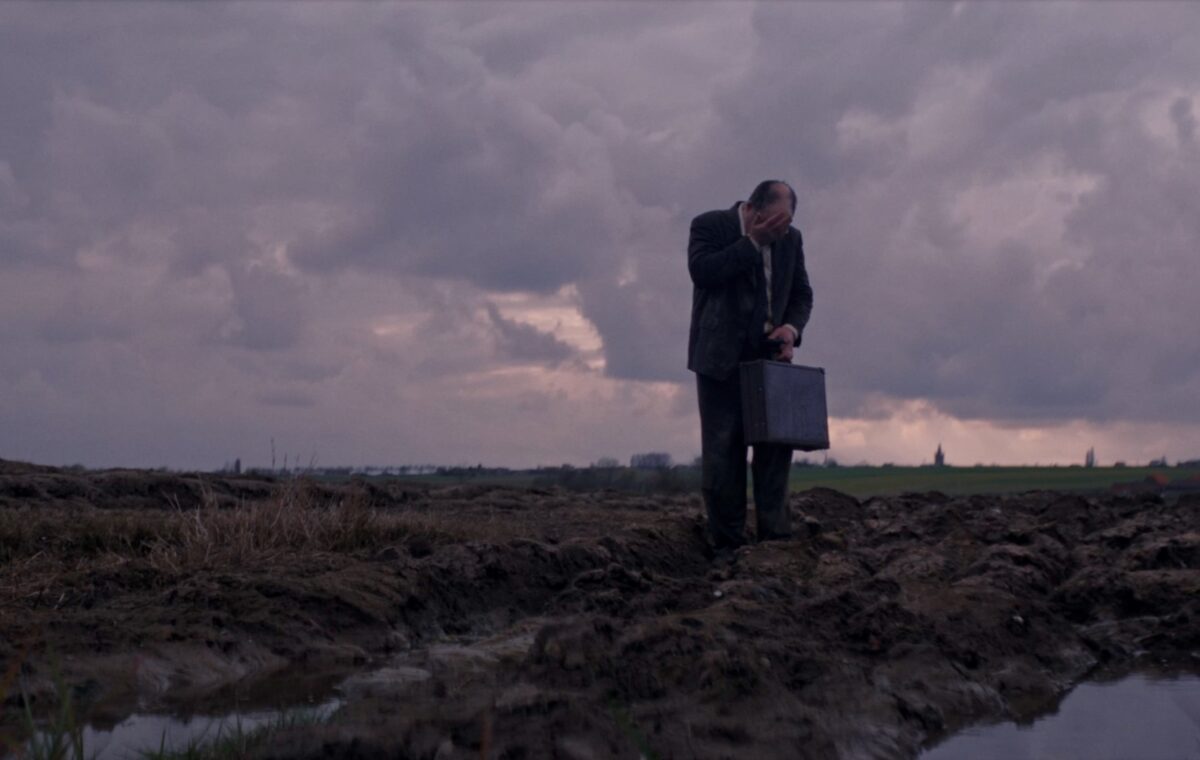
Set in the 1990s, Dust follows tech entrepreneurs Luc and Geert as they confront their inevitable downfall when their scandal becomes public. Directed by Anke Blondé, Frank van den Eeden served as the film’s DOP.
“I was expecting the typical rise and fall storyline of an international tech company movie and it wasn’t that at all,” van den Eeden says. “It was more psychological and more internal.” The script was written by Angelo Tijssens, whose other credits includeClose and Girl – both of which were captured by van den Eeden.
“Anke and I discussed the irony that’s in the script, it’s a film about speech technology, yet the two protagonists don’t understand communication at all,” says van den Eeden. “Maybe they understand the tech and how it works, but when it comes to communication, they are completely hopeless. If people are unable to communicate, then how does that translate visually?”

Blondé wanted to capture the film in CinemaScope. “She was influenced by Westerns,” van den Eeden says. “I was surprised by this initially, but Anke explained the importance of the landscapes, they were part of this Belgian story. We shot some tests with anamorphic and spherical lenses. We looked at options other than scope, but 1:2.35came out as the clear favourite.”
Like westerns, the universe where the story takes place is so important. “We wanted to achieve the same effect, but not from tumbleweeds and dry sand, but with mud and water,” adds van den Eeden. “Having these Flemish landscapes really be part of the scene was very important to us.”

Van den Eeden also points to the contrast between extreme close-ups and wide-shots in westerns. “Sergio Leone was a master of this,” he says. “We looked at this as an element to create tension visually.”
Throughout the film, subtle camera movement reflects the emotional state of the two protagonists. “As the story takes place across a 24-hour period, there is this ticking clock layer that is underneath everything,” says van den Eeden. “We thought why not use a zoom and have this super slow zooming movement. Even if nothing happens in the shot, a very slow push in creates the feeling of a ticking clock – almost like a pressure cooker building tension.”
Van den Eeden worked alongside focus puller Bart Bleuzé, gaffer Tom Van Overstraetenand key grip Hans Reynaerts. “In the script there is a pre-downfall moment where everything is still 100% perfect,” he says. “We described this as the golden moment in the film. The light is warm; camera movements are very fluid and everything for those scenes was done on Steadicam. It almost feels like a dance in a way.”

Then as the two characters’ universe starts to crumble, van den Eeden explains that they slowly transitioned to handheld camera movement. “To make everything more unstable,” he adds. “We also shifted to colder, cloudier Belgian weather, the kind you would expect in wintertime in Flanders.”
The 24-hour timespan was very appealing for van den Eeden. “There’s something interesting about following how the light evolves throughout these 24 hours. Every scene takes place at a certain time of day and we had to respect this chronology, there is no escape from it.”
The most challenging sequence to capture was the first light of the morning before the characters return to the company. “It’s the first light of the day and the sun is arrivingfor the first time in this 24-hour timespan,” he says. “The edited sequence lasts around ten minutes and it takes place on multiple locations. We were looking at how to pull thisoff schedule-wise with First AD Sofie Tusschans. We needed to get the chronology right of what the light is doing, so some of these scenes were eventually shot in reverseorder, which isn’t always fun for the actors, but it was the only way to use a sunset for sunrise and work as much as possible with natural light.”

The film also features excessive rainfall, which was at times difficult to navigate during production. “Normally on a film set, the last thing you would pray for is rain,” admits van den Eeden. “On this film, however, we wanted the worst weather.”
Van den Eeden relied on lots of wet downs and spraying windows. “We had a few bigger scenes with rain machines, which are fun to do until you’ve done five takes,” he laughs.“This was also the first time I used a rain machine on a driving car. So, you had the actors driving themselves, which is great because it adds to realism. Then we had the rain machine mounted to the back of the car and this water spraying in front of the car. We were limited with the angles we could make and if you drive too fast then the wind blows the water away. It’s a mix of lots of elements that you need to keep an eye on, but it was fun to do.”
Van den Eeden tested a lot of different lenses and looked at developing a colour scheme. “We didn’t end up creating a heavy LUT or trying to find a palette that would strictly drench this film in a nineties look. Colours on set were beautifully controlled by production designer Stijn Verhoeven and Costume Designer Charlotte Willems. I wanted to have a natural approach to their colours, scenes could be cinematic but I wanted them to be grounded in realism.”

Van den Eeden selected ALEXA 35 to shoot the film, which he has also relied on for the last few films he’s worked on. “I do like the higher ASA,” he says. “We used Cooke Anamorphic/i FF lenses.”
The car sequences in the film were a challenge, but van den Eeden says the crew were always well prepared. “It’s important to come prepared because it’s not just camera setups, but also lights, sound and all the other elements which follow,” he explains. “Add a rain machine into the equation and then do it all at night. On top of that, trying to figure out where the light is coming from when you are driving in a pitch black field. We didn’t have the money to light the complete field at night, so we needed the light to travel with us, mounted on our car.”

Van den Eeden enjoyed working on the film despite the challenges of constant rain. He says the tight focus on the two characters’ inner lives made it especially compelling as a cinematographer. “Their actions often differ from what they think or feel,” he concludes. “Our goal wasn’t to capture things “nicely,” but to focus on what’s behind the motivation.”
Key crew
Focus Puller: Bart Bleuzé
Gaffer: Tom Van Overstraeten
First AD: Sofie Tusschans
Key Grip: Hans Reynaerts
Colourist: Gregory Arvantis
Camera Equipment: Miracam
By Oliver Webb