Benoît Dervaux on capturing Jeunes mères
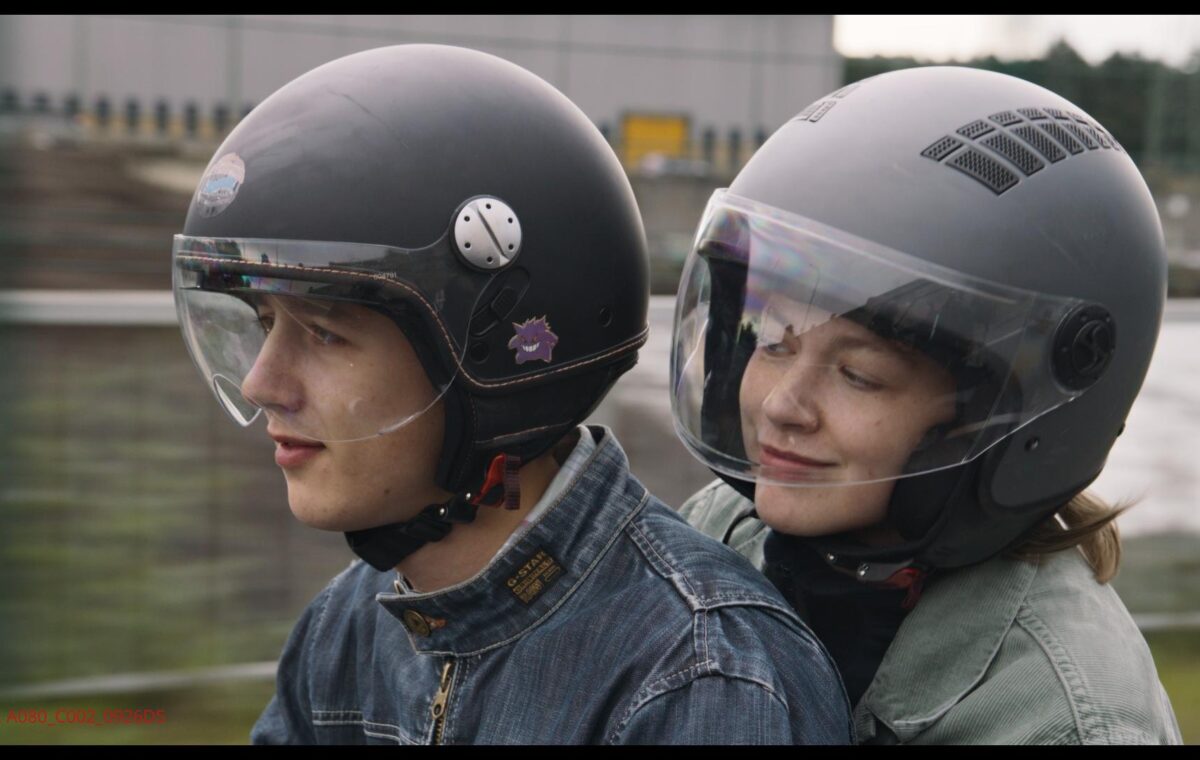
Jean-Pierre and Luc Dardenne return to the big screen with their latest film, Jeunes mères (Young mothers). The film follows five young mothers; Jessica, Perla, Julie, Naïma and Ariane and their children, who are housed in a centre for young mothers. Jeunes mères had its world premiere in the main competition of the 2025 Cannes Film Festival on 23 May 2025. The film was beautifully captured by Benoît Dervaux SBC.
Dervaux received the script at the end of February 2024 and he found both the topic and script moving and brilliant. “I also told myself that Jean-Pierre and Luc must be a little crazy, at their age, to take on such a challenge; a movie gathering five different stories with non-professional and really young actresses playing with newborns!” he begins.
A scouting at the Maison Maternelle was organised at the beginning of April of the same year. “After visiting the place for just less than hour, we shared lunch and the brothers then exposed to me their wish to shoot in the lightest way possible, in the most “documentary” manner, using only natural light, without adding any cinema lights,” explains Dervaux. “The original title of the script was La Maison Maternelle. That title, which cannot be translated into English other than as Nursery, became Jeunes Mères(Young Mothers).
The Dardennes visited the place several times before starting to write the script and were in regular contact with the center’s psychologist while developing scenes and characters.
The Maison Maternelle was designed by the architect Charles Vandenhoove according to the precepts, principles, and rules of this social nursery project. “Beyond the entrance hall of the centre, no one is admitted except the mothers and the staff (exclusively female),” says Dervaux. “One immediately grasps the “matrix” nature of the architecture.On the ground floor, around the large circular staircase are the living spaces: kitchen, dining room, playroom, meeting room, infirmary and administration. Upstairs, this same staircase with its skylight symmetrically leads to the identical rooms for mothers and their babies. Since the place hosts young mothers all year long, it was initially not considered, from a production standpoint, that it could become our set.”

Extensive location scouting was therefore carried out in the Liège area, but none of the places found were truly suitable, even with heavy set decoration work. “Obviously, the writing of the scenes set in the Maison Maternelle had been inspired by the location itself, and therefore the staging and cinematography needed to be structured around it,” says Dervaux. “After much reflection and discussions with the director of the centre, an agreement – a modus operandi – was found so that the Maison Maternelle could become our set. A house would be rented nearby, and during the shoot, the young women and staff would leave the Maison Maternelle at 7am and return at 5pm after our day’s work.”
Rehearsals and preparation began in July 2024, and filming took place in August/September. Dervaux had very few actual exchanges with the Dardenne Brothers about the visual style of the film. “This was our eleventh collaboration,” he says. “Of course, not all these films are stylistically identical, but there is clearly a strong continuity. This discussion about the cinema the Dardennes wanted to create (and therefore also the cinema we did not want to create) began with Alain Marcoen more than twenty years ago, during the preparation of La Promesse (The Promise, 1996). The references were numerous: Rossellini, Cassavetes, Pialat, Wiseman, Mizoguchi. An image aesthetic always rooted in realism, simple, without visual effects. The Dardennes never really approach the question of style head-on with direct references. They enjoy working in movement, work in progress.”
At the beginning, the Dardenne brothers wanted to separate the work of lighting and framing between two collaborators. “Alain Marcoen was the DOP, and I was the direct counterpart at the camera with whom they worked on staging,” says Dervaux. “The singularity of the Dardennes’ cinema is that the work on the image must not be ostentatious. Camera work is completely integrated into the staging, from the very beginning of rehearsals. Having experimented with 360° long takes since the beginning of our collaboration, it was clear that, on the one hand, Alain’s work managing the lighting directions was very complex, and on the other hand, the workload for both lighting and framing would have been far too heavy for one person alone. Of course, we were shooting on film at the time (S-16 mm then 35 mm).”
“If the broad stylistic lines were set at the beginning of our collaboration, the style of each film is found through trial and error, by testing scenes, confronting bodies, faces, the constraints of natural locations,” he continues. “Alain retired a few years ago, and since Le Jeune Ahmed (Young Ahmed, 2019), I have occupied both roles. This long-tested method, as a team, is part of a form of transmission, a continuum. Despite some nostalgia for film shoots and the film look, digital technologies have of course made the cinematographer’s work less arduous and less stressful.”
The Dardennes had a deep desire to shoot the film in a documentary style with natural light. “Nevertheless, having also made documentary films, I know that documentary cinema is a genre in its own right, and light – especially natural light – plays a crucial role there,” details Dervaux. “I can be wary of such fabricated ideas; shooting fiction in a documentary way can mean everything and nothing. In a documentary shoot, if a shot proves technically too complicated or even impossible, one chooses another option. In the urgency of the reality, you naturally place the camera toward a manageable field, you multiply shots.”

Clearly, such an option is not conceivable in the Dardennes’ long-take staging. Since it cannot bear any technical constraint, all axes must potentially be filmable, the camera must be able to enter and exit without cutting. “Accepting this challenge without having thought through and clarified the method could have put me in a difficult situation, leading me to sign off on an image I wouldn’t have been fully satisfied with,” admits Dervaux. “Despite my initial lack of enthusiasm about not setting up any lights, I had serious and constructive exchanges with the brothers about their vision of staging for this shoot. Given the complexity of the scenes to be filmed, with young non-professional actresses (at least not yet) playing with real babies, their desire to simplify the technical setup as much as possible was perfectly justified. After so many films and years and thanks also to our friendship and mutual trust, we went for it.”
Dervaux explains that he did look at a few references, although not only cinematographic ones. “They nourish us, but when we start working, we keep our influences at a distance,” says Dervaux. “For example, we have never used a mood board. The temptation would be too great to give in to facility, to do “in the style of.” The cinema of the Dardennes is a cinema of research “in progress” that takes certain aesthetic risks. Through its own grammar – long takes, “poorly positioned camera” in direct contact with actors/actresses, absence of reverse shots, naturalistic lighting, absence of seduction or prettiness – it deconstructs the codes of a language still too fixed by the industry, questioning the infallible norms of “aesthetic beauty.” Admittedly, the harshness of this cinema does not necessarily appeal to all audiences, which I think make their cinema even more courageous to pursue, but this style has truly explored its own furrow, its artistic singularity. Like so many others have done in music, painting, or any other discipline, it opened a breach.”
The Dardennes want a handheld camera, the only machinery device being the body itself.“For the movements, I’m assisted and guided by the grip Basile Duquenne, who becomesa “body grip”. Since the actresses were shorter than me, shoulder-mounted camera was not possible – the viewpoint would have been too high. So, I had to hold the camera by hand, at the actresses’ eye level, as I had done on Le Jeune Ahmed and Tori and Lokita(2022). I really like the ergonomics and technical features of the Arri Alexa 35; I had used it on three other films before this one. With its 17-stop latitude, I would have considered this shoot without additional light with relative serenity. Nevertheless, since I had to carry the camera at arm’s length, it turned out to be far too heavy.”
On Le Jeune Ahmed, with the Alexa Mini, Dervaux developed two tennis elbows because of the camera’s weight. “So, I looked toward RED, and my choice fell on the Raptor for its specs-to-weight ratio, not too far from the Alexa 35,” he explains. “As for the lens series, I opted for a set of Leitz Hugo lenses. Their rendering seduced me, both faithful and precise on skin tones, with just the right amount of softness and flare to my taste. In terms of weight/size, these lenses are, in my opinion, among the most advantageous, alongside the Zeiss T2.1 and Ultra Primes that we were used to using on the Dardennes’ films. The difference is of course that the Hugos cover full frame; we had 8K resolution with frame lines adapted so that the 50mm corresponded to a 40mm in 1.85 on 35mm (the brothers’ reference focal length).”

The camera, equipped with a clip-on and focus/iris motors, weighed a little over 6kg (without teradek, hot swap, and battery carried on the back). “This weight was still too heavy to physically sustain during long takes (sometimes 10 minutes) throughout the shoot, so I looked for carrying assistance,” says Dervaux. “The staging required movement in very small rooms and living spaces, so I had to be ultra-mobile. In prep, I searched for a small exoskeleton, unobtrusive, one that wouldn’t deprive me of the physical and organic connection I maintain with framing — which is not the case with most devices designed for cinema (gimbals, Easyrigs, and other exoskeletons), which are too tall, too wide and too cumbersome. I opted for a small exoskeleton designed to relieve musculoskeletal disorders in people who work at arm’s length in industry. It relieved my forearms by about 4 kg.”
Since they were not adding any lights, Dervaux explains that the most complex sequences were those very long interior scenes with large sunlit openings at the Maison Maternelle and in Ariane’s mother’s apartment. “During the tests, I had achieved very promising results with RoscoVIEW gelatine, this incredible device (a polarizing gel coupled with a rotapola on the camera) that would have been a perfect solution to our difficulties, but equipping all the windows of the main sets with this system was entirely out of budget,” he says. “We therefore had to manage exposure with great precision in order to bring the maximum information into the signal. For these particularly tricky scenes, I had asked Tanguy Delhez (gaffer) to prepare in advance the full range of ND densities (from ND06 to ND15). Each density was sandwiched between two plexiglass sheets, cut to the exact size of the set windows. Depending on changes in exterior light, these plexis were ready to be fitted in less than five minutes onto the existing windows.”
The major difficulty was to tame the intensity of exterior light so that the openings fit into the signal without overly diminishing that natural light intensity, which also set thelevel for the scene. “Once the right values were found, Olivier Patron, the DIT, was close to set to assist me with this technical aspect, pre-grading to adjust the right levels,” adds Dervaux. “I salute the work of Amaury Duquenne; it must be stressed how technically difficult it was to pull focus, often without rehearsal, on a handheld film shot in long takes at that resolution. Normally, I’m not a great fan of full-frame sensors, but for this film, I opted for 8K resolution. It seemed interesting to isolate faces and bodies, to limit to a certain extent the depth of field around them, most often keeping the aperture at T2. However, in the majority of long takes, there’s a moment when two characters come together in the frame. At that point, the iris had to be closed to T5.6 to have both characters in focus. For this aperture shift not to be visible on screen, it was counterbalanced via a motorised variND. Each of my collaborators had their command: Amaury for focus, Thomas Routiaux (2nd AC) for iris, and Olivier Patron for variND. To achieve such an aperture indoors, with a variND in front of the lens and no additional lighting, I often had to “push” the sensor and the 8K was a real asset in combating noise.”
For every one of their films, the Dardenne Brothers prepare the shoot in advance with their actors. Whenever possible, they rehearse with them on location, with props and some approved costumes, for about a month. “In parallel with these rehearsals, the art department and costume team adapt to their requests,” notes Dervaux. “They film these rehearsals with a small camera, test their staging, angles, points of view. When certain image questions arise, they call me, we discuss, and I move if necessary. Caroline Tambour, the first AD, also keeps me informed of the progress of these rehearsals so that I can anticipate any image problems that might arise.”
During scouting for Jeunes mères, Dervaux always considerd the three possible weather scenarios in Belgium: sunny, overcast and rainy. “With the Dardennes, light continuity within a single sequence is not too much of a problem, since we shoot in long sequence takes. The issue arises more during sequence transitions: at what point does the script allow an ellipsis toward a change in weather, and where must continuity be preserved?Well before scouting, I always create a complete technical breakdown per set (int./ext., day/night) with light continuity. This provides me with an overall vision, a solid basis for discussion. It also allows us to react efficiently in case of changes.”
Once shooting begins, for each scene, the Dardenne would take some time alone with the actresses to do a rehearsal. “The plan was then explained to the crew, and we would rehearse the scene mechanically with the actresses and dolls to manage movements or technical issues,” says Dervaux. “Given that this film was our eleventh collaboration, and that our method has long been tested, there was no need for deep rehearsals. Often, we didn’t rehearse at all. Once the structure of the shot was clear, the nurse would bring in the baby or babies and we shot immediately. The set was very disciplined, as this method is technically demanding. Not very comfortable, it brought a kind of urgency for the actresses, demanded great concentration, and put the whole crew under tension, each take becoming something like match point! The fragility and spontaneity of the first takes particularly interested the brothers. Once the shot was done, the baby or babies returned to the nursery. The brothers would review the take quietly, and we would take stock. Generally, in a Dardenne brothers’ film, since the switch to digital, the average number of takes per sequence shot is around 20. On Young Mothers, that average went down to 5 to 10!”
As Dervaux details, the Dardenne Brothers had the desire to go without additional cinema lights and to shoot in a documentary way. “This doesn’t mean the brothers are insensitive to light, that they don’t care or anything like that. This decision is not just about lighting the shooting and production process. As with camera work, behind this formal choice there’s a desire, if not to deconstruct, to change, challenge and evolve the codes of cinematic lighting. In the past (on film and early digital), there was the technical necessity to light. Today, the evolution of cameras (their sensitivity, their latitude) and of the entire digital toolset (colour grading) allows us to think about lighting practice very differently. By installing lights, the cinematographer gives direction, creates shadow, recreates volume, depth, perspective, three-dimensionality.”

With the brothers, Dervaux doesn’t work with mood boards. “But let’s imagine that for an interior scene, for example, I came with as references images from an Edward Hopper painting (with geometrically structured lighting direction in the frame composition), a Hiroshige print, or a Botticelli portrait,” he explains. “I’m pretty sure they would immediately choose the Japanese print and the Botticelli. From experience, I’ve seen that they don’t really like lights that are too designed or too architectural. Of course, this goes against what most DOPs like to do, but I must admit it opened my mind and led me to evolve my relationship with light. Camera sensitivity allows shooting in low or very low light. Most of the time, we had the necessary levels, but quantity does not necessarily mean quality!”
By not setting up anything, Dervaux mainly asked himself what could be turned off in order to recreate atmospheres and directions that felt entirely natural. “I remember this early morning scene in the entrance hall of the Maison Maternelle where Julie has an anxiety attack. Logically, in “realistic” terms, one might think the social worker would have turned on the service light! Instead, we switched it off and shot in natural dawn light, which even at ISO 3200 (with variND) was still underexposed! Once again, the DIT stepped in to recover levels. The natural early-morning ambiance was finalised in colour grading.”
Based on a series of reference images this time, Dervaux created with Richard Deusy (the colourist he had previously worked with on Tori and Lokita) a base LUT capable of handling as much as possible the complex situations they would encounter. “We looked for a rather soft rendering in contrast, raising midtones (without ever lifting blacks), as well as slight desaturation (so that colours wouldn’t be too aggressive). Despite the hardship endured by the young mothers, there is, in each of them, when we leave them at the end of the film, a form of hope, an opening toward life. The idea was to bring softness to the image, a sunny rendering to the film.”

During the shoot, under Dervaux’s instructions, this LUT was revised and adjusted daily by Olivier (DIT), depending on the specifics of each sequence. “As Richard’s availability later changed, the film was graded in ten days by Christophe Bousquet on Resolve at Mikros in Paris,” he says. “Grading tools offer endless possibilities, but I am not in the habit of redoing a film’s lighting in the lab. I remain convinced that the cinematography of a film is built on set, and that too much manipulation tends to denature it. That said, grading did allow us to compensate for certain weaknesses inherent in this type of method, bringing brilliance and presence to faces when necessary. I also think a serious discussion should always take place about LUTs before the shoot. They are an option, rarely entirely optimal, and can be tricky. After two or three months of editing, it can be very difficult for a director to see the image of their film evolve into something else.”
The Dardennes and their assistant thought the shoot would be long and complex.
Given the legislation and regulations in force concerning shooting with infants, the schedule planned for 52 shooting days. “If I remember correctly, each “baby character” in the film required a set of 15 babies over the course of filming, for a total of 70 babies!
Organising the shoot demanded great rigor, well-trained production and logistics, a lot of calm and focus. Each of us on the crew had to become fully aware of the responsibility of shooting with young actresses playing with newborns. Considering the expected complexity, the days were lightly loaded but very well prepared. From the very first scenes, we realised it was going much more smoothly than imagined. From the two scenes per day planned on the call sheet, we sometimes moved up to four scenes, or even more. We moved quickly and did far fewer takes than usual. The shoot wrapped in 38 days.”
Highlighting what he enjoyed most about the shoot, Dervaux points to the pleasure of a triennial reunion with Jean-Pierre and Luc, the fast-shooting rhythm, the family-like working atmosphere within the crew, and the spontaneity and generosity of the young actresses. “This shoot will remain an unforgettable adventure,” he says. “Also, the concentration and the challenge of shooting such complex long takes so that, in the end, all that work feels invisible, as if self-evident, was for me a great motivation. Toconclude, even if I remain somewhat reserved about the lighting in certain shots, I would say that the film as a whole is very coherent, that I absolutely do not regret having taken up this challenge, and that I am happy to have had the responsibility of creating its images.”
Key Crew
Tanguy Delhez – Gaffer
Olivier Patron – DIT
Amaury Duquenne – 1st AC
Thomas Routiaux – 2nd AC
Basile Duquenne – Key Grip
Christophe Bousquet – Colour grader
By Oliver Webb