
Colin Lévêque on lensing Kika
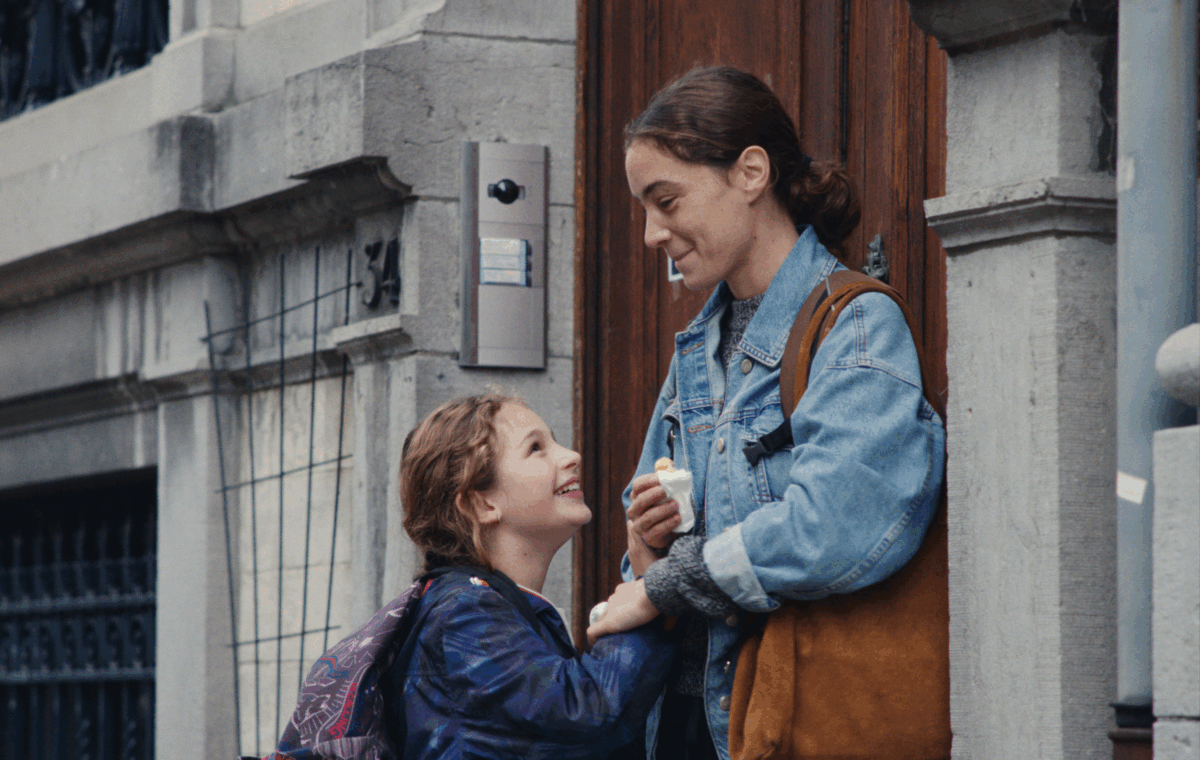
While pregnant with her second child, Kika (Manon Clavel) faces the sudden death of her partner. Heartbroken and completely broke, she sets her priorities straight. Directed by Alexe Poukine, Kika was captured by DOP Colin Lévêque, SBC.
Poukine initially contacted Lévêque to work on her first documentary feature, Sans frapper. After discussing the project, Poukine decided to work with a female DOP because of the subject matter. “We kept in touch afterwards,” begins Lévêque. “After that documentary, Alexe had a short film project called Palma (2020), which was shot in Palma, Mallorca, which I shot.”

Palma, explores a mother and her six-year-old daughter as they journey for the weekend to Majorca and the two face a series of challenges as the mother has some money issues. “There were only around six of us crew working on that short,” says Lévêque. “I was left to my own devices with the camera, lighting and focus. It was captured in a very documentary-style and Alexe and I really enjoyed this way of shooting. Alexe’s next project was a recently released documentary, focusing on the general hospital situation across France and Europe. I started working on the project, but I was only available for a few days and so I couldn’t do the whole project. As we were still very much in touch, she sent me the script for Kika and asked if we could collaborate. I was very excited about the idea and that’s how I got involved with this film.”
When it came to their initial conversations about the look of Kika, the idea was to capture the film in a documentary style, similar to the style of Palma. “We didn’t have a precise shot list, or any precise shots in mind. We had a slightly bigger crew this time around as we realised that a very small crew would not help us to achieve what Alexe had in mind. The idea was to set-up the scenes with the actors and make it come alive and then figure out a way to shoot it with a very naturalistic look.”
Years before collaborating on Kika, Lévêque and Poukine discussed films which have influenced their work. “Alexe has very precise films that she likes and the kind of look and feeling that she really enjoys.” adds Lévêque. “

They spoke about the films of Emmanuel Marre and Julie Lecoustre, specifically Rien à foutre (Zero Fucks Given), as well as a few of their short films, all of which were shot by Olivier Boonjing. “Olivier was shooting very freely, with lots of natural light and a very small team,” says Lévêque. “We also discussed Joachim Trier’s Oslo Trilogy: Oslo August,31st, Reprise and The Worst Person in the World. Alexe also showed me some scenes from Triangle of Sadness. Although she’s not the biggest Reuben Ostlund fan in general, certain scenes really capture the feeling of strangeness and awkwardness. Another reference that often comes up are Andrea Arnold’s movies, in particular Fish Tank and American Honey.”
After some initial camera tests, Lévêque opted to shoot the film with the Alexa Mini LF, as he wanted to shoot larger format than the Alexa Mini. “Alexe is also a stills photographer,” he explains. “She had this strong photographic sensitivity. That was interesting to me, to try to do a movie that could fit this sensitivity. She chose to do a ratio that is exactly the ratio of analogue photography 24 X 36, so it was 1.5:1 aspect ratio. We did some tests with the Alexa Mini LF next to the Alexa Mini with the same framing on a person, but with two different sensors. I then asked Alexe for her feeling on each one and she pointed at the Mini LF and said that’s more cinematographic. I think that was due to the lenses and the fact it’s a bigger sensor. Alexe had the impression that this was closer to the photographic look that she likes, so we went for that. I chose Nikon Prime lenses that we used for 80-90% of the movie. We also used angenieuxzoom lens 25-250mm.”
Lévêque also relied on the DJI Ronin 4D for the stabilised shots as they didn’t want to have a Steadicam. “I like to frame, so this worked well for me and I was impressed with the technology behind the Ronin and the fact that it could be large format. With that camera, you can shoot large format or Super 35. With the large format, I did some tests in post and it was very fitting, except for the shadows which aren’t that easy with the Ronin 4D and the dynamic range in the shadows. We managed to fix it in the post-production in the grading, so it was not really a problem. We used the Ronin 4D with a small photography lens that I had, Canon FD photographic lenses that I put on the Roninand it worked pretty well.”

Working in this manner, allowed Lévêque total freedom in terms of camera movement. “The main idea was that Alexe set up where the action takes place, the emotions and how she wants the scene to feel,” he explains. “Then I would almost approach it like a documentary, where you go into the scene and figure out how to shoot it. That was the main way of shooting. We would still do the scenes several times to have other angles and perspectives, but the idea was to do the scene like in master shots and have 360-degree lighting and we could shoot in every direction. I could do a bit of lighting, but not that much. Most of the lighting was from outside and playing with the practical lights. I did some work with the set team to have good practical lights and have the right sets that would enable us to shoot freely, but naturalistically.”
Lévêque worked alongside Cobalt colourist Loup Brenta and the two did some LUTs tests. “Loup is artistically very sharp,” says Lévêque. “He was able to make this LUT and do it for the LF and the Ronin, two different LUTs that fit. For the rushes it was very easy because as soon as we did the LUT for the Ronin, it was looking the same as the LF. We did the final grading in France in Rochefort with Emmanuel Fortin, a French colourist. It was our first collaboration together. He was very enthusiastic about the project and he really liked the movie. It was easy for us because with the LUT, we knew the look that we wanted. Emmanuel raised the look to an even better level. He is very fast and precise with what we had to do in the grade. It was a great two weeks and a great discovery working with Emmanuel.”
The majority of the film was shot on location in the centre of Brussels, throughout Schaerbeek, Molenbeek, Saint Gilles and Forest. “Everybody was riding a bicycle to the shoots and recces, which is very rare. We had a big set in this hotel. There is a hotel which people visit for only one or two hours, which we call a discretion hotel. We shot there for almost two weeks and we had two levels of the hotel, but the hotel was still operating so it was a strange feeling. Alexe is very into documentary, so she really wanted the places to still be alive in a way. It was very important to her that the place was alive while we were filming, which was the case. It was strange, but ultimately it was good for the movie.”
In terms of logistic everything went off without a hitch, however one scene proved awkward to capture. “During the screenings in Cannes and Brussels, you could sense that the audience was very uncomfortable, as the scene is very strange and disturbing. It’s a scene where a guy is playing the baby in a way. It comes a towards the end of the movie. Even in the shooting, it was a very strange day where we didn’t exactly know what was going to happen. We shot for a whole night and it was very difficult scene to shoot.

“Working with Alexe is a great experience,” concludes Lévêque. “She is very nice and funny and she likes it when everything is going nicely for everyone, so the shoot was not at all stressful and everybody seemed happy on this movie. We were a very small crew, which is something I really enjoy. There were two assistant cameras, one gaffer and sometimes a key grip. It was mostly a crew of four in my department and figuring out the way to shoot the film, almost like a documentary, I really like this way of shooting.”
Lévêque is currently shooting a series in Belgium and will be shooting a series in France in the autumn and winter, before reuniting with The Neon People director Jean-Baptiste Thoret for a documentary next spring.
1st AC: Myriam Amouri
2nd AC: Coline Petit
Gaffer: Emilien Faroudja
Key Grip: Leo Robeet
Colourist: Emmanuel Fortin
Special thanks: Florent Kirkpatrick from TSF Belgium
By Oliver Webb