The Neon People lensed by Colin Lévêque SBC
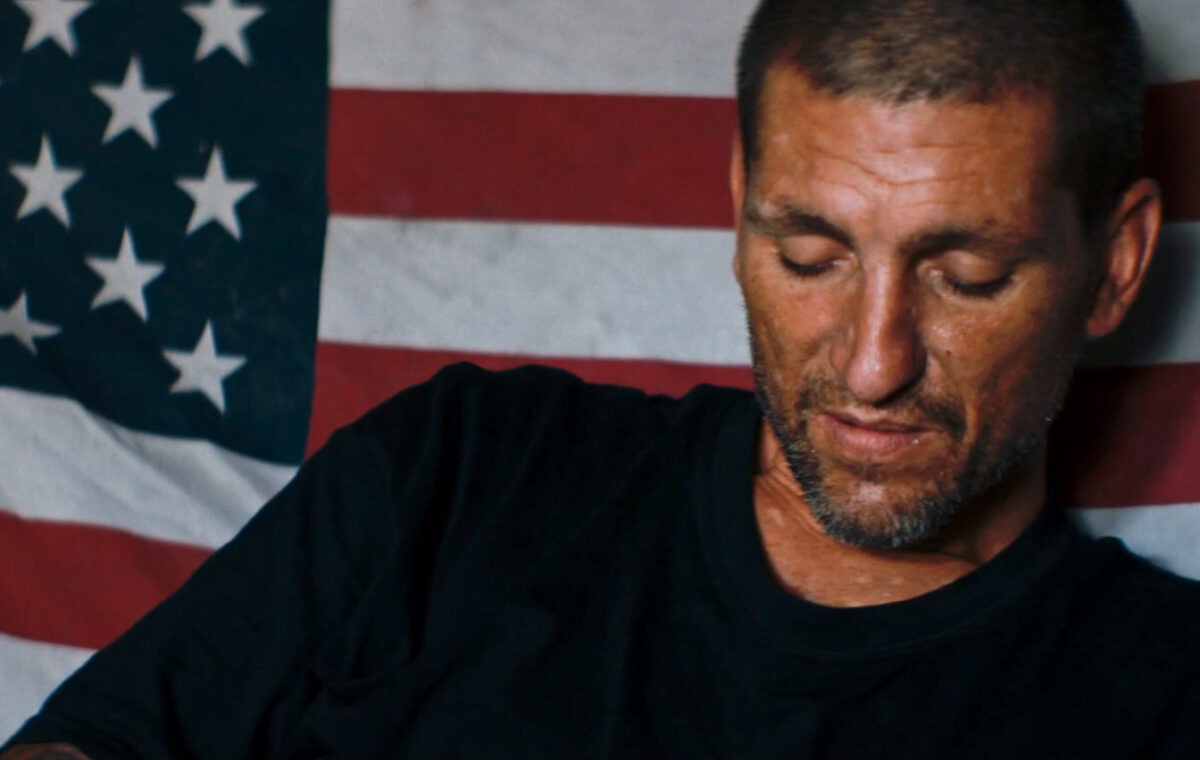
Under the famous Las Vegas Strip, thousands of homeless people live in a vast network of dark, unsanitary tunnels. The Neon People focuses on their stories. Directed by Jean-Baptiste Thoret, the documentary was captured by Colin Lévêque SBC.
“Many people actually don’t know about the tunnels,” begins Lévêque. “It’s really strangebecause when you start to dig deep into the tunnels, you realise that it’s a whole city by itself. It’s a whole community that is very apart from the strip and the rest of Las Vegas.”

The Neon People is a co-production between France and Belgium and Lévêque knew the French production company, as well as the Belgian company that were looking for a DOP. “A DOP friend of mine initially got a phone call for this documentary, but he couldn’t do it anymore as he had another project, so he gave my name to the company,” he notes. “We arranged the meeting with director Jean-Baptiste and we both had a clear idea of what we wanted in terms of aesthetics. I worked for a long time with a Belgian couple (Cattet / Forzani) who make films that are very Dario Argento-esque and Jean-Baptiste knows them very well.”

Thoret was travelling around Las Vegas in 2022 when he met a homeless man in the streets. “He asked the homeless man where he was going and the man said that he was living in the tunnels,” adds Lévêque. Jean-Baptiste wished he’d kept in contact with the man to try to understand what he meant as he was very surprised by his answer. The idea came from that initial meeting and grew in his mind for many months.”
Thoret drew on his documentary background and knowledge of New Hollywood Cinema when researching the story. “He’s quite famous as a critic and book writer in France and the US. He’s very passionate about American cinema and he’s a specialist of New Hollywood cinema, especially the movies of Cimino, Scorsese, Michael Mann, Coppola and all this momentum of the American cinema. He loves the US and not too long ago he wrote a book about director Michael Mann. He also made a movie about Cimino in the USand he went to all the places where Cimino shot his movies. He also made a documentary about the way of life and American culture in the 60s and 70s, called We Blew It, which is an American road movie about the counter culture of the 60s and 70s.”

Thoret sent Lévêque a number of films as visual references. “He was really inspired by Michael Mann’s Collateral, these very blue lights and cold colours. He wanted our exteriors nights to be cold and saturated. We also looked at Harmony Korine movies, particularly Spring Breakers. He also really loves John Carpenter movies, the contrastedlights and colours. He knows everything about cinema, so even when we weren’t working we were always talking about cinema. He could sense that I liked the same movies, although I don’t know 60s and 70s Hollywood cinema as much as he does, but those are the kinds of movies I watched as a teenager. I love this feeling of anamorphic in the US. You just put your camera with an old anamorphic lens and you are in a 70s movie. That’s what I loved about the project, having natural light in a documentary way, but still with a very strong aesthetic and very powerful colours in the light. I’d say that the references for The Neon People was a mixture between Michael Mann and Dario Argento in terms of style.”
Thoret decided to do a month of recce one year before shooting and returned to Las Vegas to find the tunnels. “He knew there was an association that kept contact with people in the tunnels, trying to help them. People that used to live in the tunnels especially wanted to help. That was the way to meet people. He realised that there was one tunnel with very nice and interesting people. He ultimately thought that it would make a good documentary, so we came back one year later in May 2023 to shoot across five weeks. All the people he had met one year previously were all there still and they were still willing to make the movie with us. That’s initially how it all started and we spent most of our time with those people.”

There were four crew for the project, Thoret, sound engineer (Julien Brossier), camera assistant (Coline Petit) and Lévêque. According to Lévêque, it was challenging because before going to the tunnels, we didn’t really know what we were going to face or where we were going to be. “Jean-Baptiste was very reassuring because he knew the people” he explains. “We didn’t know what to expect the first day we went there. We were quite shy. We didn’t want to interrupt these people’s lives, but around the second or third day we realised that they were actually happy to see us and wanted to make the movie with us. So, we felt very at ease to stay, which was kind of strange, but it was really nice. They really gave us a lot of testimonies.”
Thoret opted for the film to be shot with the Alexa Mini. “I took the Alexa at 1600 ISO, but still I was afraid that I wouldn’t have enough light to work with. We decided to go with it at the maximum capacity of the optics and the camera in terms of sensitivity and light. We went there with astera tubes and small dash light sources and just threw them in the right places when we were about to shoot, in order to have enough light in the tunnels. We also wanted to have different colours in different tunnels. Just before we shot the project, we tested different colours with the tubes that we could control with an iPhone. So, it was quite easy and we decided the three or four colours that we wanted beforehand.”

Shooting in the tunnels proved to be challenging due to this lack of light and relying on available light sources. “The tunnels are in complete darkness, so when you are right in the middle of the tunnel, you don’t have light at all. We had to rely on the light sources available within the tunnels. The director wasn’t afraid of the dark and sometimes you have a black image and just a dot of light, which is coming from lights attached to people’s heads. That was an effective way to make the audience feel and experience what it’s actually like within the tunnels. Once you are no longer afraid of the dark in the image, you can do what you want.”
In one scene there is concern as the police show up outside of the tunnels. “It’s strange because I saw this scene in the edit and I could remember the moment, but I wasn’t really afraid,” admits Lévêque. “You start to get the point of view of people living in the tunnels. If we were shooting in the street, then as a film crew you know the police are there to protect you, but as soon as you are in the tunnels with the people, then the police are a threat, even for us as crew. The police never go in the tunnels as they aren’t really allowed. They just walk maybe 10m and then go back.”

Lévêque particularly enjoyed shooting a documentary that utilises anamorphic lenses and bright colours. “You always feel that a documentary needs to be very naturalistic and not too contrasty, but actually they don’t all need to be that way. When working in documentary you don’t always have time to light as you have to capture what is happening in the moment, so you don’t have time to figure things out. We had to be fast setting up lights. I like working this way because sometimes it can surprise you and although the lighting isn’t perfect, it gives you something that you couldn’t have otherwise imagined.”
“I loved meeting these people and to learn about what happened in their lives that made them live in the tunnels,” concludes Lévêque. “Understanding their world was very interesting. The idea of the film is about the Vegas of above, but also the Vegas below. The social and financial contrasts are huge. As a European it’s very strange to see so much wealth and poverty in the same place, just a few metres away from one another. I also love American culture and we are very influenced by it. I really loved learning more about it and the way people live there. I also enjoyed working as a crew of four. It had all the ingredients of why I do this job.”
By Oliver Webb
