Frédéric Noirhomme on shooting Jouer avec le feu
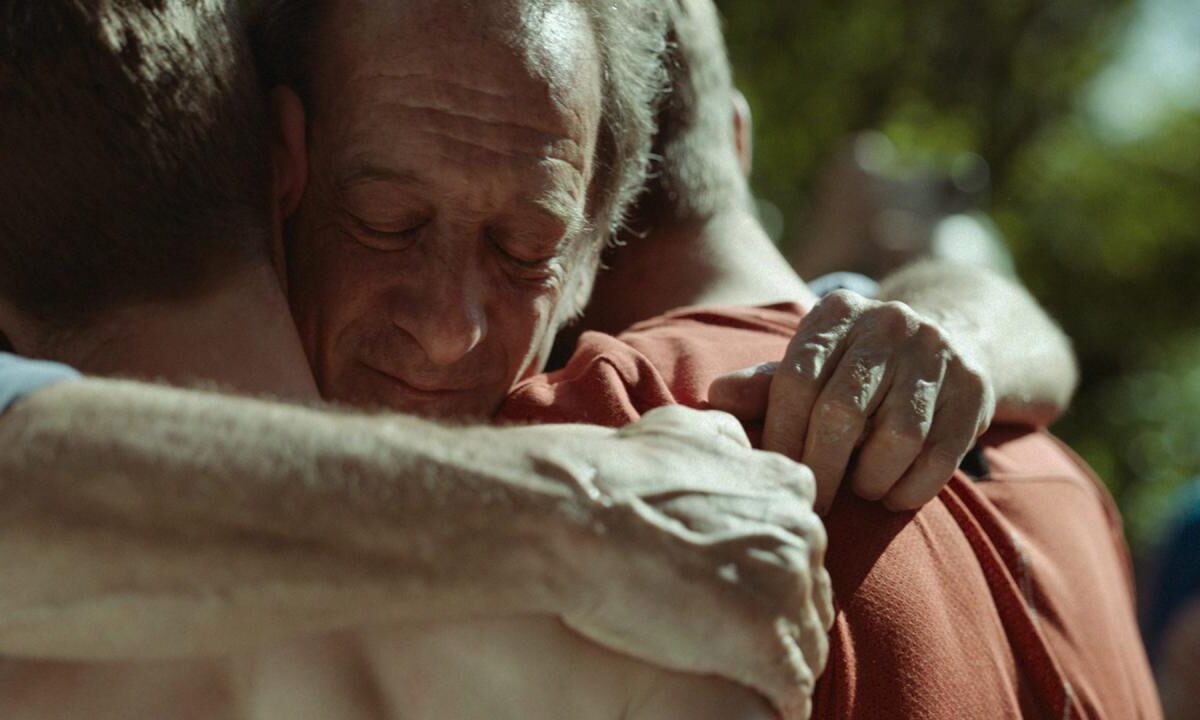
A year ago, “Jouer avec le feu,” a film directed by Delphine and Muriel Coulin, and beautifully shot by Frédéric Noirhomme, was released in French cinemas. The film had a remarkable world premiere at the 2024 Venice Film Festival, winning the Best Actor award for Vincent Lindon and the Leoncino d’Oro Youth Award.
How did you prepare and discuss the visual style of the film ?
FN : Three days after my first meeting with the directors, we went to scout locations, which we filmed with the lead actor, Vincent Lindon, at an SNCF railway construction site in Fontainebleau. Muriel worked for a long time as a camera assistant and then as a camera operator before making films with her sister Delphine. She arrived at the location scouting with her Canon 5D, Delphine with an iPhone, and I with my Sony Alpha 7s. Vincent Lindon was in costume to immerse himself in his role, and we shot what would become the second sequence of the film. I was immediately immersed in the world of the film!
Delphine and Muriel had a clear idea of the aesthetic they wanted and their approach to editing. It was obvious that they wanted to tell their story visually, adapting the framing and shots to the emotion they wanted to evoke, and not just execute the script. Originally, the film was called “Up to the Task,” and the idea was to film in layers this father who works high up on railway overhead lines, trying to be up to the task of raising his children, but also to convey the mother’s absence through empty spaces in the frame, hence the idea of filming in 2.35 aspect ratio and playing with close-ups, reflections, and chiaroscuro, to make this absence and their intentions as directors palpable.

There are other sequences in the film that seem to have been shot more casually with a smaller camera…
FN: Yes, Delphine and Muriel liked having the option of filming short, improvised scenes off-set, so they sometimes gathered the three actors to film them with a simple iPhone or camera during their lunch break, like the sequence where the father plays soccer with his two sons in the garden, or the flashback shot where we see the two brothers in their bedroom at home.

The dance sequences that recur several times in the film, how were they filmed? How did the idea come about (like that long opening shot)?
FN: These nightclub scenes were in the script, and the directors were inspired by certain scenes from Charlotte Wells’ film “Aftersun,” where Paul Mescal dances in strobe-like white lights. We planned to film in a room at the Centre Pompidou-Metz, which was equipped with a video projector. Delphine and Muriel immediately wanted to play with this tool they discovered there. We discussed the different possible effects, and after a few tests using front projection, rear projection, etc., we had the idea of trying to project the image we were filming directly onto the screen and playing with the latency of the signal to create a slight delay between the filmed image and the projected image, thus creating this mise en scene of the dancing character.
The film has few cuts, and sequences are often shot in fairly static long takes, with a camera position and angle carefully chosen according to what is happening in the scene, often using a long lens: how did this style come about?
FN: Delphine and Muriel knew they wanted to play with a shallow depth of field, and compressing somewhat in the background. Their directing style often relies on playing with depth, and long lenses allow them to be more distant while maintaining a kind of proximity and bringing the characters closer. The shot values with long lenses change less when the character moves; it’s a visual language they like. The large format of the LF camera also reinforces this feeling of magnified perspectives.
As I mentioned, since Muriel was a camera operator, we very often filmed with two cameras to have two simultaneous angles of the same take, and shooting with a long lens also facilitates this method.

How did you work on setting up the sequences?
FN: Once the blocking of the scene and the actors’ performances were established, we thought about how to adapt the shot list. Delphine and Muriel often already had a formal idea in mind. It was
sometimes a gesture, a color, a material, a sensation. The further the filming progressed, the more I
understood their way of working and could make suggestions that aligned with their vision. For example, for the courtroom scenes, they knew very well that they wanted to play with the reflections in the accused bench or actors silhouetted against the windows, and once these intentions had been clearly communicated, it became much more intuitive to make appropriate proposals.
There are some sequences shot handheld; was that decided in advance?
FN: In pre-production, all the sequences that were shot handheld had been identified, and we
stick to that during filming, yes. But some scenes were more improvised! We’ve all
experienced those mornings when we hear, “Hey what if we shot all of this handheld?”
How did you approach the lighting? Did you use a lot of light?
FN : Many sequences take place in this house where the three main characters interact with love and violence. Delphine and Muriel had a very clear aesthetic vision and wanted to play with chiaroscuro, backlighting, to highlight the mother’s absence, the future absence of the son. The aim was to create in this interior a sense of nostalgia, anguish, and even joy. But always to highlight the tragedy of a father who loves his children but cannot stop a terrible train in motion, a purely tragic inevitability. We quickly agreed on the idea of using a lot of natural light, not compensating too much internally, and maintaining backlighting and chiaroscuro. There are even some rather intense acting scenes that were filmed from quite a distance, in complete backlighting, in long takes, without showing the actors’ faces. The directors’ formal and aesthetic vision could go that far.
We also worked extensively with the production designer to find colors that would suit the different sequences; the hues of the walls and curtains served as guidelines for light and color. Fus’s room, for example, played by Benjamin Voisin, is bathed in red because his curtains are red. We therefore installed SL1 MIX (RGB) lights above the windows to enhance this effect, while still maintaining a more neutral lit area in the frame. This contrast allows the red to appear even denser and more saturated.
Similarly, when Fus is welding—the weapon he will use to attack his assailant—he is protected by a red tarp through which we see his father approaching. The directors had seen this red tarp in a welding workshop and asked for it to be installed on the set so they could film through it.
They use elements of reality, making them meaningful in the film and conveying emotion without words. For outdoor lighting, we mainly used Arri M-series HMIs (M90 and M40), but I must admit that more recently, I’ve been very impressed by the Nanlux Evoke 2400 or 5000 lights, which have the advantage of being bicolor and much more energy-efficient. Between an M90 and an Evoke 5000, the carbon footprint is almost halved!

What technical choices did you make: camera, lenses, grip equipment, lighting?
FN: Since the directors wanted to shoot certain sequences with two cameras, and to be able to easily take out a camera to shoot short additional sequences, I suggested shooting with RED, using a smaller and lighter Komodo for Muriel and a Raptor as the main camera. We were lucky enough to do tests on location with these two cameras, as well as with an Alexa mini LF. After watching the tests, they preferred the Alexa mini LF’s image quality.
Regarding lenses, we tested the Zeiss Supreme Prime and the Panavision Primo 70s. We immediately preferred the smoothness of the Primo 70s. We also used an Optimo 24-290 zoom lens at times, such as the sequence where Fus plays soccer with his friends at the beginning of the film, by switching the camera sensor to Super 35mm. As for grip equipment, we mainly used a Peewee 4 dolly with a slider, and a Steadicam for a dialogue sequence on a railway track. We also used a steerable rail for a day when we filmed on railway tracks, which allowed us to do tracking shots directly on the train tracks!
Do you work with a DIT or a LUT on set?
After the filmed tests, we went to M141 with Charles Fréville, the colorist, to fine-tune the shooting LUT. We based it on a slightly vintage ARRI look that had red in the blacks and a touch of cyan in the highlights. During the final color grading, we slightly reduced the LUT’s effect for a more natural look, but the direction remained the same.

1st Assistant Camera: Luc Pallet
Gaffer: Jérôme Di Cola
Key Grip: Jan Gagnaire
Colorist: Charles Fréville
Camera Equipment: Panavision Paris
Lab: M141
Sills by Carole BETHUEL
by Colin Leveque