
Pieter Van Campe on capturing Young Hearts
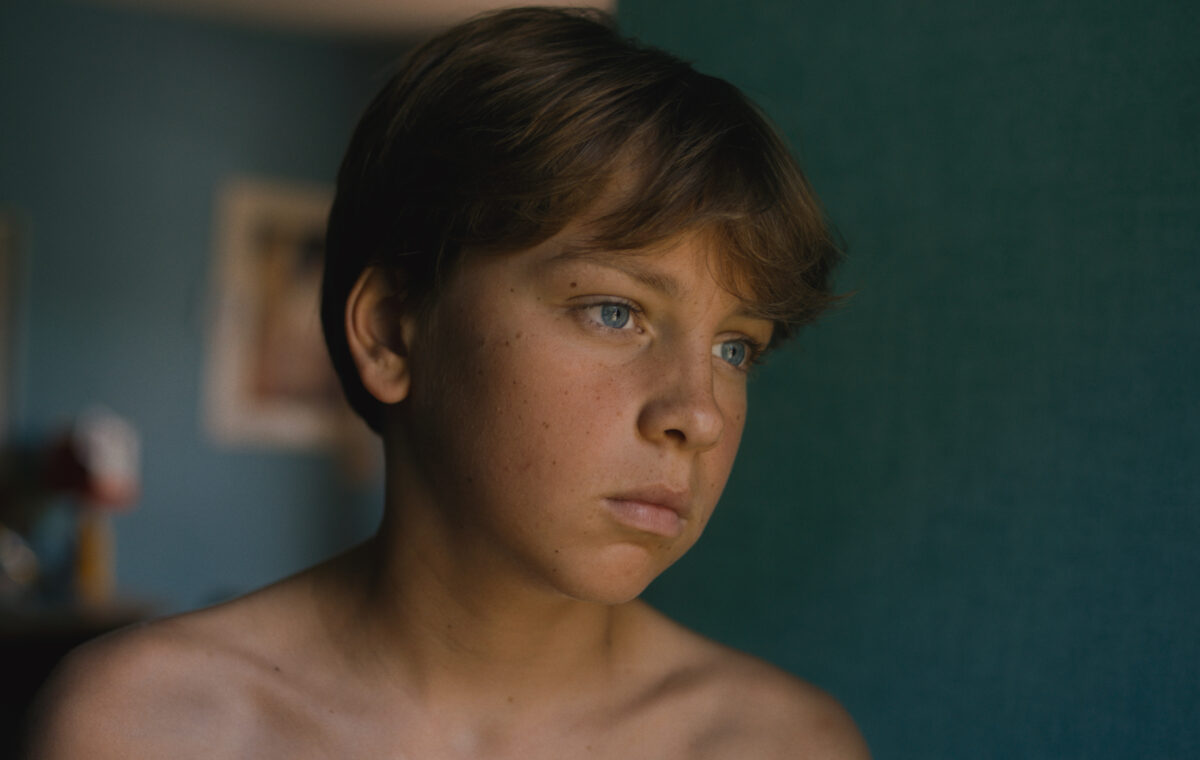
The film Young Hearts by director Anthony Schatteman was shown for the first time in France at the Chefs Op’ en Lumière film festival in Chalon-sur-Saône on 1 February. The film has already been released in Belgium since 18th of December 2024. The film tells the story of Elias, a fourteen-year-old boy who is attracted by his new neighbour, Alexander. He soon realises that this is the first time he has really fallen in love. The two young actors are impressive and very moving in their first roles. The young director of photography Pieter Van Campe has captured the powerful and special gaze that only young boys and girls get at that age, in a way that is light and free. We got the chance to talk to him about his work on this film.
How different was it to prepare for a feature film compared to a short or series?
The main difference for me is the time. We filmed for 25 days, which might seem a bit short, but for a 90-minute film, that’s about three minutes a day. At the moment I’m working on a TV series and we have to shoot eight minutes a day, which is a lot. That’s a huge difference, especially because a TV series has lots of writers. It’s like a machine: lots of people are working on it and it needs to go fast. With Anthony, it’s his own story, and he has a very clear vision because he spent five or six years working on it. This allows you to explore the movie more deeply. It’s a different experience, but I like both.

You’re used to working fast ?
With this one, I had plenty of time to explore different acting styles, moods and character balances. It’s all about the small details.
Do you know him from a long time?
Yes, I was second assistant camera operator (2nd AC) and then first assistant camera operator (1st AC) on projects in Flanders where he was a children and extras coach. Then I was part of a small TV series (Leef, 2021) where the director (Lenny Van Wesemael) had to stop filming because of personal issues, so they asked Anthony to direct the last two episodes. We did this together and we got on really well. We enjoyed working together, so we worked on another TV series (2DEZIT, 2022-2024) and some commercials, and we became friends. Basically, we had a good vibe, which is why he asked me to shoot his movie.

Which lenses did you use?
Anthony wanted to use an Arri Alexa Mini because he knew this camera, and we had a small budget for the lenses. I asked the rental company what we could have. We did some comparative shots (wide lenses and a 50mm) with the main actor, Lou, fitting the costumes. We used the Cooke S4, the Cooke S3 Classic, the Zeiss SuperSpeed, the Arri UltraPrime and the Summicron. Then I showed them to Anthony without mentioning anything, and he chose the Cooke S4. For one shot, in the bar location in Brussels, we had an Angenieux zoom.
Did you do the same thing with filters?
I hardly ever use filters. I like to keep the camera as compact as possible. If I can, I take off the mattebox as well. I mostly keep it on when I’m outside to avoid flares. I like to keep the camera as light as possible because I carry it in my hand. I prefer to create a LUT to get the look as close as possible to the final film. This means that when I go to the grading stage, it doesn’t change that much. I don’t use filters, except for special effects, but that’s not really my thing.

So, before you start filming, you do tests in the locations with the actors to get the look right with your colour grader?
Yes, I work with the colour grader during the preparation. For this project, it was a little bit weird because the colour grader had to come from Holland, but for the preparation, I worked with Kene Illegems. Then we did the colour grading in Holland with Veerle Zeelmaekers. So it was a collaboration of two graders, but it was a very good combination.
Did you work on the texture as well during the preparation?
After creating the LUTs from the camera tests on location, we did a preliminary grading, adding grain to understand the direction we were taking. But you can’t include grain in the LUTs. For this project, the grain was very soft. Anthony said he wanted to make something that reminded him of his youth. When we talk about ‘Disneyfication’, we don’t mean a heavy grain. Everything has to be bright and shiny.
So you didn’t try to push the camera to see a little bit of the texture of the camera itself ?
No, I never do that. During the shoot, I mixed between 160 ASA and 800. You can do it really quickly and I don’t notice any difference. Together with the internal ND filter, it works best for me.

Did the director tell you about other worlds or directions as the disneyfication? Did he talk to you about lighting and framing?
The most important things we agreed was that it has to be beautiful, bright, shiny, happy, with no darkness. It should be slightly saturated. It had to be the best summer of your teenage years. He didn’t say much about the framing. I guess the reason why we work together is because we understand each other about the framing. When the actors start playing, we basically know we want to go first on Lou, then someone else… or otherwise we just let them do and I follow. If they move a little bit further away from the camera, I follow them and go in tighter, for instance. It just happens naturally. Anthony doesn’t like to write a precise shot list. He’s more interested in getting the right feeling than in sticking to a precise shot list.
The list of things to do was always changing, though, wasn’t it?
Yes, when we’re getting ready, we make a plan and decide which shots are the most important. I always start the day with a plan, but then it changes a little bit during the day. It’s important to start the day with a plan so you can think about other things and try new things. Otherwise, you’ll just fall back into your usual habits.

How did you organise the filming?
We shot for three or four days a week with a very small crew, without lights or grip. For example, we filmed in the forest with the grandpa, and we didn’t use lights or grips. We did the same for the scenes in Brussels. Anthony really likes working with small crews. This means we can try more and things can happen more easily too, which I really like. There are lots of scenes in the movie that were filmed with a small crew. For the production team, these days were a good investment.
Which scenes did you need a big crew for?
It wasn’t that big. All the outdoor night scenes and the concert were a big set up. The final concert, with all its extras, was the busiest day for us.
For those scenes, did you still try to avoid having any stands or lights on stands?
We tried to light the stage from outside the tent and we created some top bounce. It’s not always perfect, but it gives the actors so much freedom. Everyone was happy, and able to move freely.
So you weren’t frustrated about not being able to control that?
It wasn’t the goal of the project to do so. The most important thing is the natural feeling you get.

Did you talk with the director about how close you wanted to be from the actors? I was surprised at how close you were to the young actors, especially as they were so young.
We shot most of the movie with two lenses: the 32mm and the 50mm. All the close-ups were taken with the 50mm lens. Each time we started with the 32mm, after two or three takes Anthony would say, “OK, let’s use the 50mm” and he would always ask me to move closer. He was pushing me a lot. So I also tried to back off, to be a little bit wider sometimes. In the end, I think the mix works well.
There are a lot of outdoor scenes in the film. How did you manage with the lighting when it was daylight?
We used negative fill behind the camera, but no lights. We didn’t have the money to light up the outside on a sunny day. We only had one M40 and one M18, so we couldn’t use them outside. We did a lot of preparation for all the outdoor scenes, including going on location scout several times, making plans with Sunseeker, and basing our schedules on the light hours. We knew we had two hours, so we rehearsed when the sun wasn’t good yet and shot when it was ready. We adjusted our schedules to take advantage of the sun. We had a lot of rainy days, so we were also able to switch to interior scenes. This is an advantage of having a small crew. We were always checking the weather forecast for the next day, trying to be as flexible as possible, and having everything ready to go at any time.

How did you pick the colours of the house for the movie?
We made a moodboard. We spoke a lot with the art director and the costume designer, to suggest ideas to Anthony. It was quite natural, probably because Anthony chooses people who have the same taste as him. He knows it will match. It’s a big credit to Anthony.
Did you have a special rig to be at the right height ?
Mostly it was an easy rig or handheld. The camera was tethered, though. I have a backpack for the battery, video transmitter, etc., so what I have in my hands is as light as possible. For all the bike shots, we rented a small golf cart and I was positioned at the back, either handheld or with the Easyrig. For the opening credit scene, we had just one day of Steadicam.
When you’re filming indoors or at parties, did you use something called DMX? This is a system that lets the gaffer switch on and off the lights as the actors and camera move around.
No, but everything was on DMX because the gaffer has his gaffer controller command with everything wireless. He did some adjustments, but it wasn’t really planned for.
So he did his own thing, or did you talk about it?
It was very relaxed and natural again! The last scene with the big party was very chaotic, with lots of extras, Anthony was far away and it was so noisy we could hardly talk. I tried really hard to talk to him, focusing on what we needed and how to get the extras moving. I was working with Bob Wouters as gaffer, who is very experienced and good at his job. We had spoken before and he knew what to do. It was the end of the shoot, so we had gotten to know each other and he knew what I liked. I don’t have any problems with handing over control to him. It was just a matter of what was most important at the time.

Which movies did Anthony show you?
Romeo and Juliet (Baz Luhrmann, 1996) and My Girl (Howard Zieff, 1992), especially for the kissing scenes. He likes classic Hollywood movies, like Titanic. It’s great that he likes it and wants to do it.
I also reminded me of Call Me by Your Name (Luca Guadagnino, 2017). The images are different, but they both have that perfect summer vibe.
Yes, it was also in the references, but he wanted to stay away from any kind of sexual things. Lots of gay stories have a sexual element. But here, the actors are very young, and he didn’t want that for a young audience. It’s quite unique in this way. Now the actors are sixteen and 30 cm taller, the feeling would have been completely different. At the time of filming, the age of the actors was just right for this story.
Focus Puller : Gaetan De Poorter
Key Grip : Miguel Rinckhout
Gaffer : Bob Wouters
Colorist : Veerle Zeelmaekers
Set pictures : Thomas Nolf